
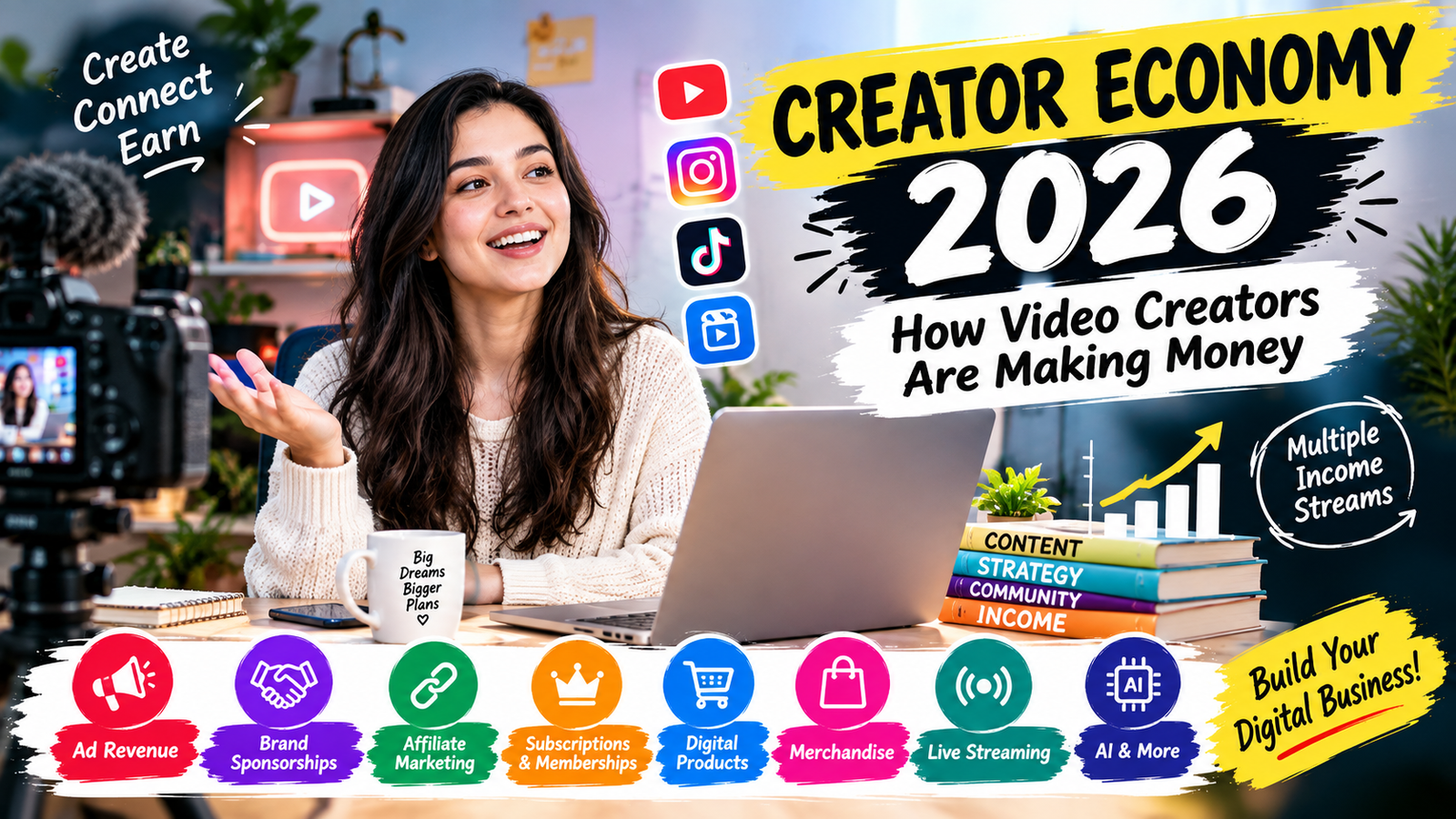
The creator economy 2026 is changing how people build careers online. Video creators are no longer dependent on a single platform or one source of income. Instead, successful creators are combining advertising, brand partnerships, subscriptions, affiliate marketing, digital products, live streaming and other revenue streams to turn audiences into sustainable businesses.
Short-form video has also made content creation more accessible. A smartphone, basic editing skills and a strong idea can be enough to start building an audience. Meanwhile, artificial intelligence is helping creators with research, scripting, editing, captions and content planning.
But does getting millions of views automatically make someone rich? Not necessarily. The creators earning consistently understand something important: an audience is an asset, but monetization requires a strategy.
Here is how video creators are making money in 2026 and which opportunities are shaping the modern creator economy.
What Is the Creator Economy?
The creator economy refers to the ecosystem of individuals who create content and earn money from their audiences, skills, communities or intellectual property.
Video is at the centre of this ecosystem.
YouTube, Instagram, TikTok and other platforms give creators ways to distribute content globally. At the same time, brands can work directly with creators instead of relying only on traditional advertising.
Creators can now operate like small media companies. One person might produce videos, negotiate sponsorships, sell products, run a newsletter and manage a paid community.
That flexibility is one reason the creator economy continues to attract entrepreneurs and aspiring influencers.
1. YouTube Ad Revenue
Advertising remains one of the most recognizable creator income streams.
YouTube creators can earn money from advertisements shown around eligible content through the platform’s monetization programs. Revenue can vary depending on audience location, content category, advertiser demand, watch time and other factors.
Long-form videos can be particularly useful because they provide opportunities to build watch time and deeper audience relationships.
However, creators should avoid depending entirely on advertising.
Why? Algorithm changes, seasonal advertising demand and fluctuations in views can cause monthly income to change significantly.
Successful YouTubers often use ad revenue as one part of a larger business model.
2. Brand Sponsorships
Brand partnerships can become one of the most valuable revenue sources for established video creators.
Companies pay creators to introduce products or services to relevant audiences. A technology creator might work with a smartphone brand, while a beauty creator could partner with a skincare company.
The value of a sponsorship isn’t determined only by follower count.
Brands increasingly care about:
- Audience relevance
- Engagement
- Video quality
- Conversion potential
- Creator credibility
- Geographic audience
- Content performance
A smaller creator with a highly targeted audience can sometimes provide better results than a huge account with low engagement.
3. Affiliate Marketing
Affiliate marketing allows creators to earn a commission when viewers purchase products through their referral links.
This model works particularly well for product-focused content.
For example, a technology creator can review smartphones, laptops or headphones and include affiliate links. A fashion creator can recommend clothing, while a beauty creator can share skincare products.
The creator doesn’t need to manufacture or store the product.
Instead, they earn when their content generates qualifying sales under the affiliate program’s terms.
Video is especially effective here because creators can demonstrate products rather than simply describing them.
4. Paid Subscriptions and Memberships
Audiences are increasingly willing to pay for exclusive content when they feel connected to a creator.
Membership models can include:
- Exclusive videos
- Private communities
- Behind-the-scenes content
- Members-only livestreams
- Early access
- Educational resources
- Special Q&A sessions
This approach creates recurring revenue rather than relying entirely on individual transactions.
For creators with loyal communities, even a relatively small number of paying members can become meaningful income.
5. Live Streaming
Live video has developed into another powerful monetization channel.
Creators can interact with audiences in real time while earning through subscriptions, virtual gifts, donations, sponsorships or product sales, depending on the platform.
Gaming remains an important live-streaming category, but the format has expanded into education, fitness, beauty, shopping, entertainment and lifestyle content.
Live streaming also strengthens community.
Viewers aren’t simply watching a finished video. They’re participating in an experience.
6. Selling Digital Products
Creators don’t always need to sell someone else’s product.
Many are creating their own digital products, including:
- Online courses
- E-books
- Templates
- Presets
- Guides
- Design assets
- Educational materials
- Paid newsletters
Digital products can be attractive because creators can sell them repeatedly without traditional physical inventory.
A creator who teaches video editing, for example, could sell editing templates or a structured course alongside free YouTube tutorials.
7. Merchandise and Physical Products
Merchandise remains another option for creators with strong personal brands.
T-shirts, hoodies, accessories, stationery and other branded products can turn an online community into a consumer business.
The strongest merchandise usually reflects the creator’s identity or community rather than simply placing a logo on a generic product.
Some creators are taking the idea even further by launching their own product brands.
In this model, the creator becomes not only a media personality but also an entrepreneur.
8. Short-Form Video Monetization
Short-form videos have become essential for audience growth.
Instagram Reels, YouTube Shorts and TikTok-style content can reach viewers quickly and introduce creators to people who have never encountered their content before.
However, short videos don’t always generate the same direct revenue as longer content.
That is why many creators use short-form content as a discovery funnel.
A short video attracts attention, while longer videos, newsletters, memberships, products or affiliate links generate deeper monetization.
This combination can be more effective than trying to make every short video directly profitable.
9. Creator Licensing and Content Deals
Creators can also earn by licensing their content.
A brand may pay to use a creator’s video in advertising, on social media or across other marketing channels.
This is different from a traditional sponsorship because the company may receive specific rights to reuse the content.
Creators should carefully review licensing agreements. Usage duration, platforms, geographic restrictions and advertising rights can all affect the value of a deal.
Understanding these terms can help creators avoid giving away valuable content rights for too little.
10. AI Is Changing Creator Workflows
Artificial intelligence is becoming an important productivity tool in the creator economy 2026.
Creators can use AI to brainstorm ideas, generate outlines, research topics, create captions, remove background noise, produce subtitles and speed up editing workflows.
Some creators are also experimenting with AI avatars, synthetic voices and automated video production.
Yet AI doesn’t eliminate the need for creativity.
Viewers still respond to personality, originality, storytelling and authenticity. The most effective approach is often to use AI for repetitive tasks while keeping the human creator at the centre of the content.
Why Personal Branding Matters More in 2026
As more people begin creating content, competition is increasing.
Simply posting frequently isn’t enough.
Creators need a recognizable identity.
That could come from a unique visual style, a particular storytelling format, specialist knowledge or a distinctive personality.
For example, “technology videos” is a broad category. A creator who specializes in affordable gadgets for students has a much clearer positioning.
A focused niche also makes it easier for brands to understand the creator’s audience.
The Rise of Multi-Platform Creators
Creators are increasingly distributing their content across multiple platforms.
One long YouTube video can become:
- YouTube Shorts
- Instagram Reels
- TikTok videos
- LinkedIn clips
- Pinterest video content
- Newsletter material
This strategy increases reach without requiring creators to invent completely different content for every platform.
However, each platform has its own audience expectations and algorithms. Successful creators adapt the format instead of simply uploading an identical video everywhere.
How New Creators Can Start Making Money
You don’t need millions of followers to begin.
Start by choosing a specific niche and creating useful or entertaining content consistently.
Then focus on building trust before aggressively selling products.
A simple creator monetization path could look like this:
Free content → Audience → Community → Affiliate offers → Sponsorships → Products → Recurring revenue
The exact path will vary by niche.
A finance creator may monetize through sponsorships and educational products, while a gaming creator may focus on livestreaming, memberships and brand partnerships.
Creator Economy 2026: Biggest Trends to Watch
Several trends are likely to shape creator businesses throughout 2026.
AI-Assisted Content Production
AI tools are reducing the time required for repetitive production tasks.
Social Commerce
Creators are becoming an important bridge between entertainment and online shopping.
Niche Communities
Smaller, highly engaged communities can be valuable to creators and brands.
Long-Form Revival
Short videos attract attention, but long-form content can build deeper relationships.
Creator-Owned Businesses
More creators are moving from sponsorship income toward products, services and independent businesses.
Final Verdict
The creator economy 2026 is no longer simply about becoming famous on social media. It is increasingly about building a sustainable business around an audience.
Video creators can earn through advertising, sponsorships, affiliate marketing, memberships, livestreams, digital products, merchandise, licensing and social commerce. AI is also making production faster, allowing individual creators to operate with workflows that once required much larger teams.
The biggest opportunity may belong to creators who diversify.
Instead of depending on one platform or one income stream, creators can build audiences across multiple channels and develop products or services they control.
Ultimately, views may open the door, but trust, consistency, community and smart monetization turn attention into income. In 2026, the creator isn’t just the person making the content. Increasingly, the creator is the brand, the media company and the business.