
Introduction
Influencer marketing has changed dramatically over the past few years. In 2026, brands are no longer working with creators simply to post a sponsored photo and generate likes. Video has become the centre of influencer marketing, while creators are increasingly being treated as storytellers, business partners and performance marketers.
Short-form videos, creator-led advertisements, live shopping, AI-powered workflows and social commerce are changing the way brands connect with consumers. In India, the shift is particularly significant: Meta reports that 97% of consumers surveyed watch video on its platforms daily, while Reels is increasingly influencing product discovery and purchase decisions.
So, what should brands expect from influencer video marketing in 2026?
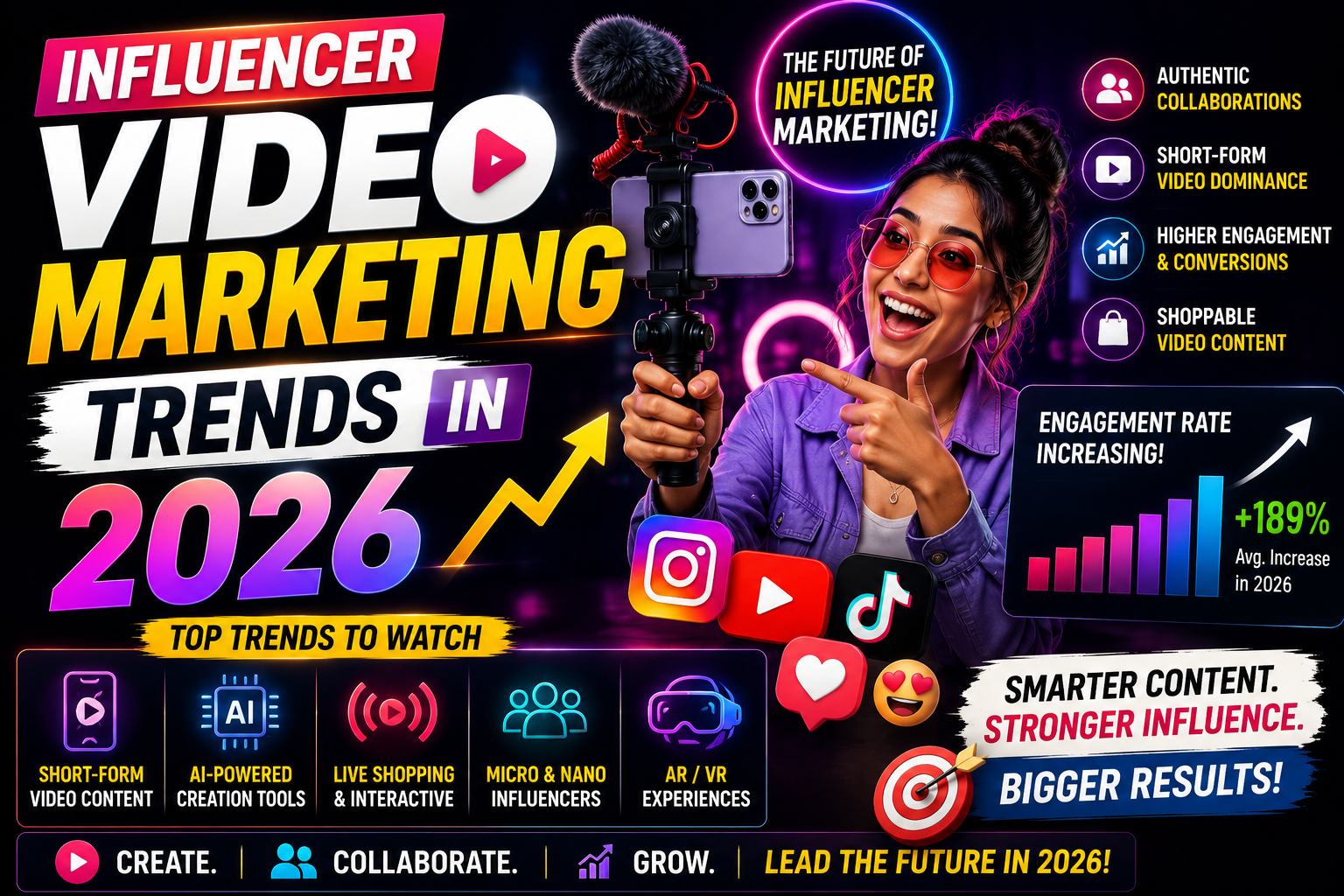
Here are 10 major trends brands need to know.
1. Short-Form Video Continues to Dominate
Short-form video remains one of the biggest forces in influencer marketing.
Instagram Reels, YouTube Shorts and TikTok-style vertical videos allow creators to communicate an idea within seconds. Instead of asking audiences to read a long product description, creators can demonstrate the product, tell a story or share an opinion visually.
For brands, this means influencer campaigns need to be designed around strong hooks, fast storytelling and clear value.
In India, Meta’s 2026 research found that Reels users engage heavily with categories including beauty, fashion, lifestyle, fitness, comedy and sports.
The lesson is simple: brands should not treat short-form video as an optional format anymore.
It should be part of the core content strategy.
2. Micro and Nano Influencers Are Becoming More Valuable
The biggest influencer is not always the best influencer.
In 2026, brands are increasingly looking beyond follower counts and focusing on relevance, engagement, credibility and audience fit.
Micro-influencers can have smaller audiences but stronger relationships with their communities. Nano-influencers can offer an even more personal connection.
Research from Sprout Social indicates that audiences increasingly prioritize content relevance and style over simply looking at follower counts.
For example, a skincare brand may benefit more from working with several smaller skincare creators whose audiences actively discuss skincare than from partnering with one celebrity whose audience is much broader.
This trend is particularly useful for brands with limited marketing budgets.
3. Authentic Creator Content Beats Overly Polished Ads
Consumers have become better at recognising traditional advertising.
A highly scripted influencer video can immediately feel like an advertisement. In contrast, content that looks natural and fits the creator’s usual style can feel more believable.
That is why authenticity is becoming a major competitive advantage.
Creators are increasingly using formats such as:
- Personal reviews
- Behind-the-scenes videos
- “Get ready with me” content
- Product comparisons
- Tutorials
- Unboxing videos
- Day-in-the-life videos
- Honest product experiences
- Problem-and-solution videos
The goal isn’t to make every sponsored video look imperfect.
The goal is to make the content feel native to the creator’s personality and audience.
4. AI Is Becoming Part of the Creator Workflow
Artificial intelligence is rapidly becoming part of influencer marketing.
Creators and brands can use AI for:
- Content ideas
- Script development
- Audience analysis
- Video editing
- Captions
- Translation
- Performance analysis
- Creator discovery
- Campaign optimisation
Industry research shows that AI is increasingly being integrated into creator workflows and influencer campaign operations.
However, brands should avoid using AI simply to produce huge quantities of generic content.
The strongest campaigns still require human creativity and creator authenticity.
AI should make the workflow faster—not make the content feel robotic.
5. Creator Content Is Moving Into Paid Advertising
Another important 2026 trend is the growing connection between influencer content and paid media.
Brands are no longer necessarily posting creator videos organically and then moving on. They can turn successful creator content into advertisements and distribute it to larger audiences.
CreatorIQ reports that creator content accounted for an average 44% of brands’ paid media creative assets, with 92% of surveyed paid-media leaders using creator content in paid media in some capacity.
This creates an interesting cycle:
Creator → Organic Content → Performance Testing → Paid Advertising → Conversion
A creator video that performs well organically can potentially become one of the brand’s strongest advertising assets.
6. Social Commerce Will Connect Video Directly to Sales
Influencer videos are increasingly becoming shopping experiences.
Instead of watching a creator explain a product and then searching for it separately, consumers can increasingly move from video to product discovery to purchase within connected social-commerce ecosystems.
Meta’s 2026 India research describes this shift as a move toward scroll-led discovery, where AI, Reels, creators and messaging increasingly connect discovery with commerce.
This creates an enormous opportunity for brands.
Imagine watching a creator demonstrate a beauty product, tapping the product, reading reviews and purchasing it without leaving the platform.
That is the direction influencer commerce is moving toward.
7. Live Shopping Will Become More Important
Short-form videos may grab attention, but live video creates something different: real-time interaction.
Live shopping allows creators to demonstrate products, answer questions and respond to audiences instantly.
It works particularly well for categories such as:
- Beauty
- Fashion
- Electronics
- Food
- Fitness
- Home products
The 2026 Influencer Marketing Benchmark Report found that while live shopping has not become universal, it ranks as a high-upside format among brands.
Brands should therefore consider testing live commerce rather than assuming it will work automatically.
A successful live-shopping campaign needs the right creator, compelling products, clear offers and strong audience engagement.
8. Episodic Influencer Content Is Growing
Why create one sponsored video when you can create a story?
Episodic creator content is becoming increasingly attractive to brands because it can turn influencer marketing into an ongoing narrative.
For example, a fitness brand could create a four-part series:
Episode 1: Starting the fitness journey
Episode 2: Testing the product
Episode 3: Progress update
Episode 4: Final results
This approach gives audiences a reason to return.
Industry analysis has highlighted episodic content as an emerging 2026 trend because creators want more stable partnerships while brands want deeper connections with audiences.
Long-term storytelling can therefore be more powerful than isolated sponsored posts.
9. Brands Are Measuring ROI, Not Just Likes
Influencer marketing used to focus heavily on metrics such as:
- Likes
- Comments
- Followers
- Views
Those metrics still matter, but brands increasingly want to know something more important:
Did the campaign actually help the business?
Modern influencer campaigns are increasingly measured through:
- Click-through rates
- Sales
- Conversion rates
- Affiliate revenue
- Customer acquisition cost
- Return on ad spend
- Promo-code usage
- Product-page visits
- Brand searches
The 2026 influencer marketing landscape is moving toward stronger performance accountability, with brands increasingly connecting creator campaigns to revenue and measurable outcomes.
This means creators need to understand that their value isn’t determined only by audience size.
Their ability to drive action matters too.
10. Creators Are Becoming Long-Term Brand Partners
Perhaps the biggest change is the evolving relationship between brands and creators.
Instead of hiring a creator for one video, brands are increasingly interested in long-term partnerships.
A creator may become:
- A brand ambassador
- A recurring campaign partner
- A product tester
- A creative consultant
- A product-development collaborator
- An affiliate partner
- A business partner
Recent industry reporting shows creators taking on broader strategic roles, including helping brands shape marketing campaigns and products.
Some creators are even moving into investment and equity relationships with consumer brands, showing how influencer partnerships can extend beyond traditional advertising.
For brands, long-term partnerships can build familiarity and trust.
For creators, they can provide more predictable income and deeper involvement in brands they genuinely believe in.
How Brands Can Win With Influencer Video Marketing in 2026
Following trends isn’t enough.
Brands need a clear strategy.
Start by choosing creators based on audience relevance rather than follower count. Then give creators enough creative freedom to maintain their natural voice.
Create multiple pieces of content instead of relying on one video. Test different hooks, formats and storytelling approaches.
Most importantly, connect influencer content with measurable business objectives.
A strong campaign might look like this:
Creator selection → Content creation → Organic testing → Paid amplification → Social commerce → Conversion tracking → Optimisation
This approach turns influencer marketing from a one-off awareness campaign into a full-funnel marketing system.
Influencer Video Marketing Mistakes Brands Should Avoid
Even with all these opportunities, brands can still make expensive mistakes.
Choosing Creators Only by Follower Count
Large audiences don’t automatically mean high conversions.
Over-Scripting Videos
Creators know their audiences better than most brand briefs do. Give them guidelines without removing their personality.
Ignoring Smaller Creators
Micro and nano influencers can deliver strong relevance and community engagement.
Focusing Only on Views
A million views mean little if nobody clicks, remembers or buys.
Using AI Without Human Oversight
AI can accelerate content production, but generic AI-generated content can damage authenticity. Consumer skepticism toward AI-led influencer promotions is already a significant consideration for brands.
Running One-Off Campaigns
Long-term partnerships can create stronger recognition and storytelling opportunities.
The Future of Influencer Video Marketing
The future of influencer marketing is moving toward a combination of creators, video, AI, commerce and measurable performance.
The creator is no longer simply the person appearing in front of the camera. Creators are increasingly becoming media channels, community leaders and creative partners.
At the same time, consumers are becoming more selective.
They don’t necessarily want another perfectly polished advertisement. They want useful information, entertainment, authenticity and recommendations from people they trust.
For brands, the opportunity is enormous—but competition for attention is also increasing.
The winners will likely be those that understand that influencer marketing isn’t simply about paying someone to promote a product.
It’s about building stories that audiences actually want to watch.
Conclusion
Influencer video marketing in 2026 is becoming more sophisticated, measurable and creator-driven. Short-form video remains central, while micro-influencers, authentic storytelling, AI tools, social commerce, live shopping and long-term partnerships are reshaping the industry.
For brands, the biggest lesson is to move beyond vanity metrics and focus on relevance, trust, storytelling and measurable business results.
The creator economy is no longer a side channel. It is becoming an important part of the modern marketing ecosystem. Research from CreatorIQ and other industry sources reflects this shift toward creator-powered advertising and full-funnel marketing.
In 2026, brands that give creators the freedom to create naturally, use technology intelligently and measure campaigns properly will have a stronger chance of turning views into engagement, customers and long-term brand growth.