
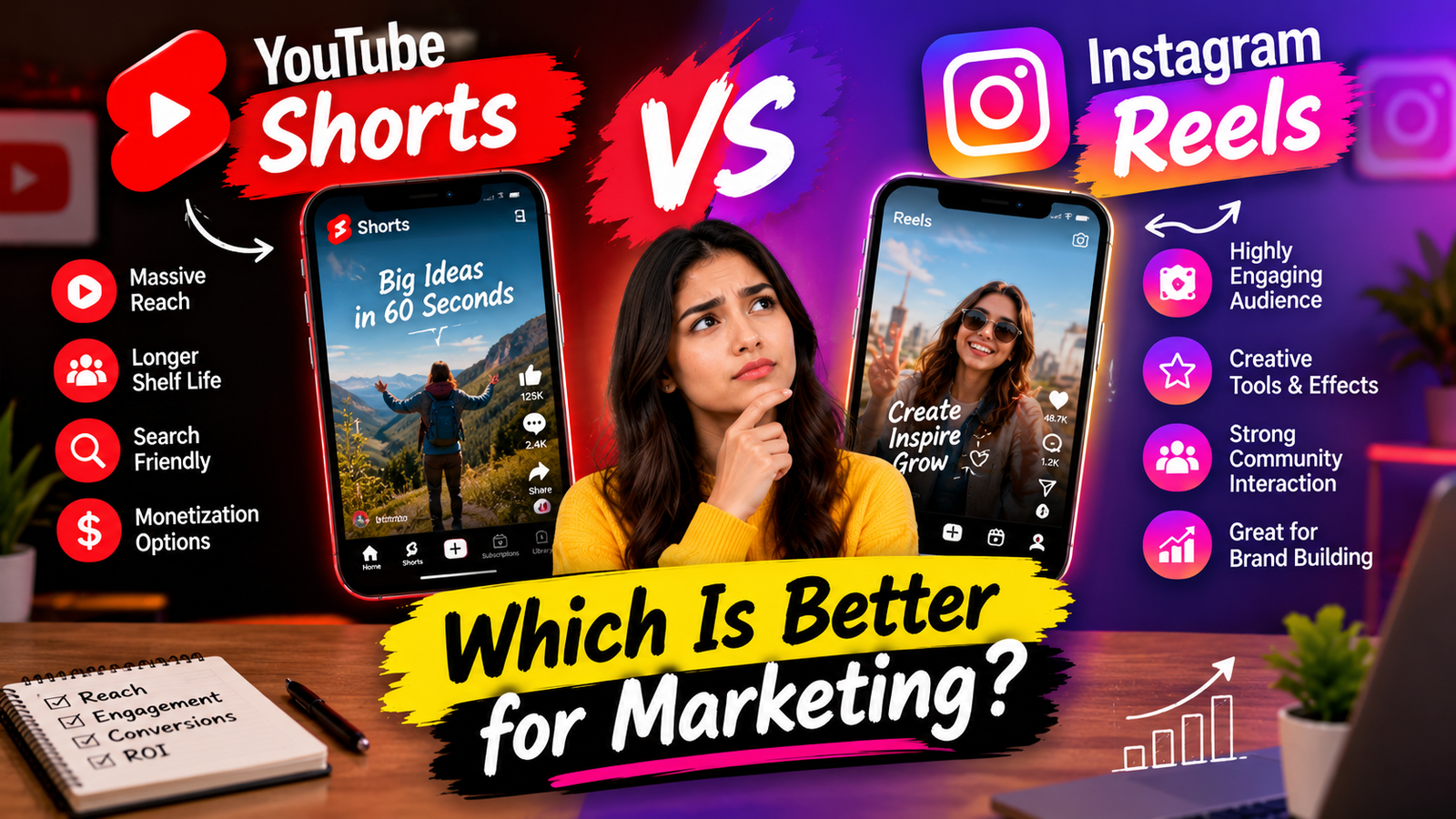
YouTube Shorts vs Instagram Reels is a common debate for brands, creators, and marketers looking to grow their audience in 2026. Both platforms focus on short-form vertical videos, but they offer different content experiences and marketing opportunities.
YouTube Shorts can help brands reach audiences through YouTube’s broader video ecosystem, while Instagram Reels can connect short-form videos with a brand’s Instagram profile, Stories, messaging, and shopping-related content. Because of these differences, choosing between YouTube Shorts and Instagram Reels depends heavily on your audience, content goals, and marketing strategy.
So, which platform should your brand use? Instead of treating one as a universal replacement for the other, it helps to understand how YouTube Shorts vs Instagram Reels compare across reach, engagement, content discovery, audience behavior, branding, and conversions.
What Are YouTube Shorts?
YouTube Shorts are short vertical videos designed for quick viewing on YouTube.
They allow creators and businesses to share bite-sized entertainment, educational content, tutorials, product demonstrations, commentary, and other video formats.
One major advantage of Shorts is their connection to YouTube’s wider ecosystem. A short video can introduce viewers to a channel where they can also find longer videos, playlists, livestreams, and other content.
For brands that already invest in YouTube, Shorts can become an important part of a broader YouTube marketing strategy.
What Are Instagram Reels?
Instagram Reels are short-form vertical videos published within Instagram.
Reels can appear in users’ feeds, the Reels experience, Explore, and other areas of Instagram, depending on the platform’s distribution systems.
Instagram also connects Reels with other features such as Stories, direct messages, profiles, and creator collaborations.
This makes Reels useful for brands that want to combine short-form video with a broader social media presence.
YouTube Shorts vs Instagram Reels: Key Difference
The biggest difference is the ecosystem surrounding each format.
YouTube Shorts are part of a video-first platform where viewers can move between Shorts and longer videos.
Instagram Reels are part of a social-first platform where short videos exist alongside photos, Stories, messages, creators, and other social interactions.
This difference can influence how people discover and interact with branded content.
1. Audience Reach
Both platforms provide opportunities to reach people beyond an account’s existing followers.
YouTube has a massive video ecosystem, which can be useful for brands building a long-term video library. Shorts can introduce viewers to a channel and potentially encourage them to explore longer content.
Instagram, meanwhile, is heavily focused on social discovery and interaction. Reels can help brands reach users who are interested in visual, lifestyle, entertainment, shopping, and creator content.
Instead of asking which platform has more reach in general, brands should ask where their specific audience spends time.
2. Content Discovery
Discovery is one of the biggest reasons marketers use short-form video.
YouTube Shorts can benefit from YouTube’s recommendation and search ecosystem. A useful video can continue attracting viewers beyond the original publishing period.
Instagram Reels are strongly connected to social discovery. Users can encounter videos through recommendations, Explore, creator content, shares, and their existing social network.
For educational or searchable topics, YouTube can be particularly useful. For trend-driven and highly visual social content, Instagram can be a natural fit.
3. Engagement
Engagement can look different on each platform.
Instagram is built around social interactions. Users can like, comment, share, save, follow, and send content through direct messages.
YouTube also provides likes, comments, shares, and subscriptions, but its overall ecosystem is more centered around video consumption.
Brands should therefore track more than likes.
Important metrics include:
- Watch time
- Completion rate
- Shares
- Saves
- Comments
- Subscribers
- Followers
- Profile visits
- Website clicks
- Conversions
These metrics provide a clearer picture of whether a video is achieving its marketing goal.
4. YouTube Shorts for Long-Term Content Strategy
One of YouTube Shorts’ biggest advantages is its relationship with long-form video.
A brand can create a Short that introduces a topic and then direct interested viewers toward a longer YouTube video.
For example, a technology brand could publish a 30-second smartphone tip as a Short. Viewers who want more information can then watch a detailed phone review.
This creates a content funnel:
Short → Channel → Long Video → Website/Product
For brands that already have a YouTube channel, this approach can make Shorts particularly useful.
5. Instagram Reels for Social Media Branding
Instagram Reels can fit naturally into a broader social media branding strategy.
A brand can combine Reels with:
- Stories
- Carousel posts
- Product posts
- Creator collaborations
- Direct messages
- Live videos
- Profile content
For fashion, beauty, food, travel, lifestyle, and retail brands, this interconnected environment can be valuable.
For example, a fashion brand could post a Reel showing three outfit combinations, use Stories to answer questions, and direct users toward its profile or product pages.
6. YouTube Shorts vs Instagram Reels for Businesses
Businesses should select platforms based on their marketing objectives.
If your goal is to build a comprehensive video library and connect short-form content with longer educational or entertainment videos, YouTube Shorts can fit well.
If your objective is to strengthen social engagement, showcase products visually, collaborate with creators, and maintain an active Instagram presence, Reels can be useful.
Some businesses may benefit from using both.
7. Which Platform Is Better for Brand Awareness?
Both can support brand awareness, but the strategy should be different.
On YouTube, brands can build recognition through a combination of Shorts and long-form videos.
On Instagram, brands can use Reels alongside visual posts, Stories, creators, and community interactions.
The best awareness strategy focuses on recognizable branding, consistent messaging, strong storytelling, and content that viewers actually want to consume.
8. Which Is Better for Product Marketing?
Instagram Reels can be particularly useful for visually demonstrating products.
Beauty brands can show tutorials. Fashion companies can create styling videos. Food brands can demonstrate recipes. Electronics companies can highlight features.
YouTube Shorts can also showcase products, especially when the content connects naturally with reviews, tutorials, comparisons, or longer product videos.
For expensive or complex products, combining Shorts with longer YouTube content can help provide additional information before a purchase.
9. Which Platform Is Better for SEO?
YouTube is owned by Google and operates as one of the world’s major video-search platforms.
This makes YouTube SEO an important consideration for brands publishing educational or searchable video content.
Brands can optimize relevant elements such as video topics, titles, descriptions, spoken content, and channel organization.
Instagram also provides discovery through search and recommendations, but its user experience is more centered on social discovery.
If your content answers questions people actively search for, YouTube may deserve a significant place in your strategy.
10. Which Is Easier for Beginners?
Both platforms are accessible to beginners.
You don’t necessarily need expensive cameras or professional studios. A smartphone, decent lighting, clear audio, and a strong idea can be enough to start.
The bigger challenge is consistency.
Beginners should experiment with different hooks, formats, topics, and video lengths rather than expecting every upload to perform immediately.
11. How AI Is Changing Shorts and Reels Marketing
AI tools are becoming increasingly useful for short-form video production in 2026.
Marketers can use AI to help with:
- Content ideas
- Script writing
- Captions
- Voiceovers
- Subtitles
- Editing
- Translation
- Content repurposing
- Video variations
For example, a brand can turn a long webinar into several short educational clips.
However, AI-generated content should still reflect the brand’s personality. Automation can speed up production, but originality and audience understanding remain important.
12. Should Brands Use Both YouTube Shorts and Instagram Reels?
For many brands, using both platforms can be more practical than choosing only one.
A single idea can become multiple platform-specific videos.
For example:
YouTube Short: “5 iPhone features you should know.”
Instagram Reel: “3 iPhone tricks you probably haven’t tried.”
The central topic is similar, but the hook and presentation can be adapted to each platform.
Avoid blindly reposting the exact same video everywhere. Instead, adjust the opening, captions, CTA, and editing when necessary.
YouTube Shorts vs Instagram Reels: Comparison
| Feature | YouTube Shorts | Instagram Reels |
|---|---|---|
| Main ecosystem | Video-first | Social-first |
| Long-form connection | Strong | More limited |
| Social interaction | Strong | Strong |
| Search potential | Strong | Growing |
| Product discovery | Useful | Strong for visual products |
| Creator collaborations | Available | Strong |
| Educational content | Excellent fit | Good fit |
| Trend-based content | Strong | Strong |
| Brand storytelling | Strong | Strong |
| Best approach | Shorts + YouTube ecosystem | Reels + Instagram ecosystem |
Neither platform is automatically better for every brand. The right choice depends on your audience and objectives.
How to Choose Between YouTube Shorts and Instagram Reels
Ask yourself five questions:
Where is your audience?
Research your current followers and customers before deciding.
What type of content do you create?
Tutorials and searchable educational content may fit naturally into YouTube. Lifestyle and highly visual social content may work well on Instagram.
Do you create long-form videos?
If yes, Shorts can become an effective entry point into your YouTube channel.
Do you sell visual products?
Instagram Reels can work naturally with product showcases, creators, Stories, and social interactions.
What does your data say?
Your own analytics are often more useful than generic platform comparisons.
Final Verdict: YouTube Shorts vs Instagram Reels
The YouTube Shorts vs Instagram Reels debate does not have one universal answer.
YouTube Shorts can be valuable for brands building a video-first content ecosystem and connecting short-form videos with longer content. Instagram Reels can be valuable for brands focused on social discovery, visual storytelling, creator partnerships, and community engagement.
For brands with enough resources, using both can create a broader short-form video marketing strategy.
The key is not simply to publish more videos. Create content for a specific audience, give every video a clear purpose, adapt content to each platform, and track meaningful performance metrics.
In 2026, short-form video is an important part of digital marketing. The brands that approach it strategically can use Shorts and Reels not just to chase views, but to build awareness, educate audiences, encourage engagement, and support broader business goals.