

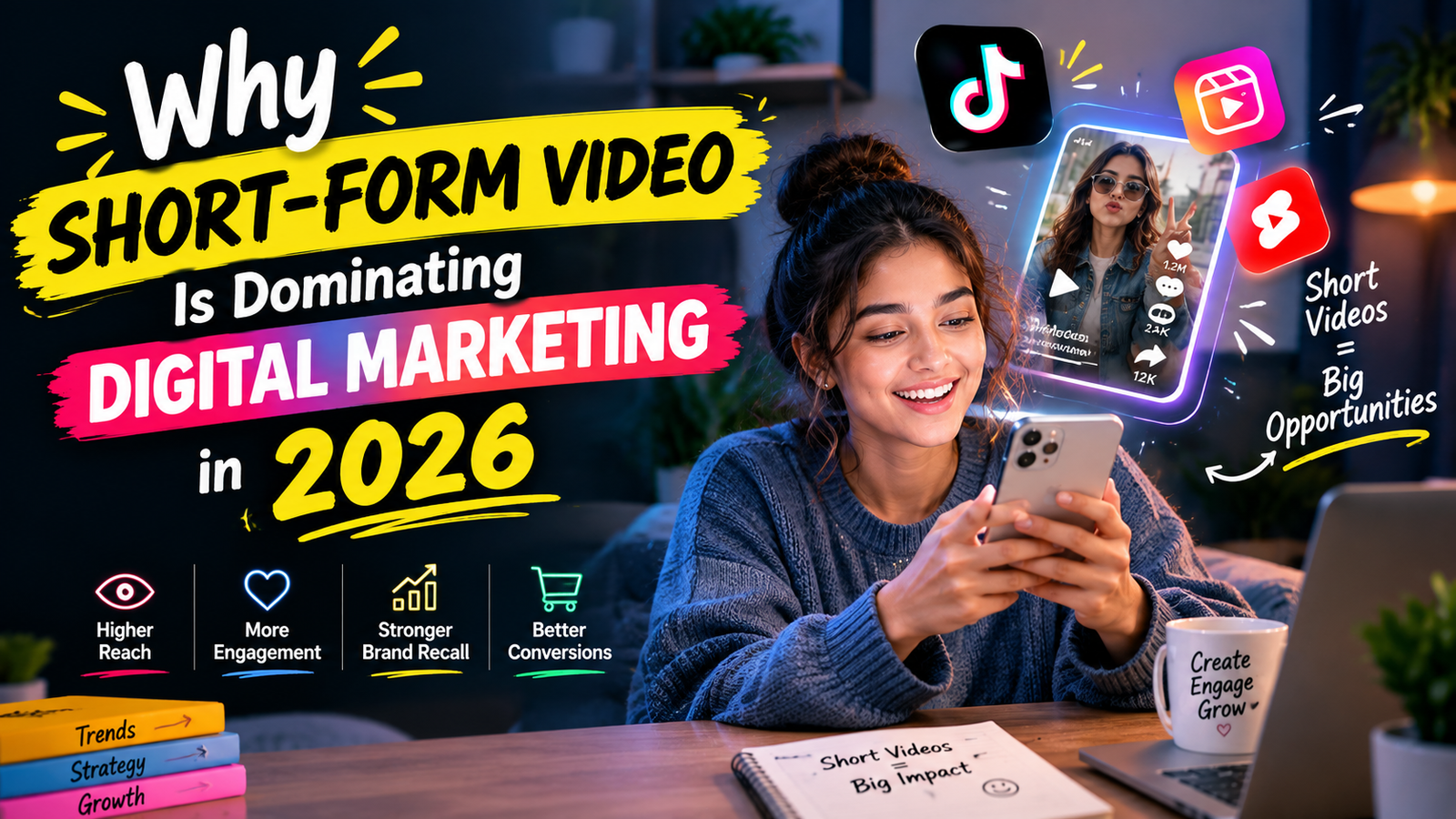
Short-form video is dominating digital marketing in 2026, and brands are paying close attention. From Instagram Reels and YouTube Shorts to TikTok videos, quick visual content has become a major way for businesses to reach, engage, and convert online audiences.
Why is this happening? People have limited attention, but they still want useful and entertaining content. Short-form videos deliver information quickly while fitting naturally into everyday scrolling habits.
For brands, this format offers another major advantage: a single creative idea can reach new audiences, generate engagement, support product discovery, and strengthen brand awareness. However, success requires more than simply uploading random videos. Businesses need a clear short-form video marketing strategy built around audience interests, strong storytelling, consistency, and measurable goals.
Let’s explore why short-form video is becoming such an important part of digital marketing in 2026.
What Is Short-Form Video Marketing?
Short-form video marketing means using brief videos to communicate a marketing message, promote a product, educate an audience, or build a brand.
These videos can include:
- Instagram Reels
- YouTube Shorts
- TikTok videos
- Product demonstrations
- Tutorials
- Customer testimonials
- Behind-the-scenes clips
- Educational videos
- UGC-style content
- Quick tips and explainers
There is no single perfect video length. The ideal duration depends on the platform, topic, audience, and purpose.
The key is simple: deliver value quickly.
Why Is Short-Form Video So Popular in 2026?
The digital environment has become increasingly crowded. Consumers see advertisements, articles, images, posts, emails, and videos throughout the day.
Short videos provide an easy way to consume information without requiring a significant time commitment.
Imagine someone waiting for a friend or taking a short break from work. Watching a 20-second video feels easier than reading a long article or watching a 15-minute presentation.
That convenience makes short-form video naturally suited to mobile-first audiences.
1. Short Videos Capture Attention Quickly
The opening seconds of a video are extremely important.
Users can scroll away instantly, so brands need to communicate the value of a video quickly.
A strong opening might ask a question, introduce a problem, reveal an interesting fact, or promise a useful solution.
For example:
“Making this skincare mistake?”
or
“Three phone features you should know.”
These openings create curiosity without requiring a long introduction.
Brands that understand attention can create videos that encourage viewers to keep watching.
2. Mobile Users Love Quick Content
Smartphones have transformed how people consume digital content.
Users can watch videos almost anywhere: while commuting, relaxing, shopping, or taking a break.
Short-form videos work particularly well on mobile screens because they usually use vertical formats and require minimal effort to consume.
For marketers, this creates an opportunity to reach audiences throughout the day.
3. Social Platforms Prioritize Video Discovery
Platforms such as Instagram, YouTube, and TikTok have built strong ecosystems around video discovery.
Short-form content can appear beyond a brand’s existing follower base. That means a small business can potentially reach people who have never interacted with its account before.
This discovery potential makes short-form video particularly attractive to brands trying to increase awareness.
However, reach is not guaranteed. Content quality, relevance, audience response, and platform-specific factors all influence performance.
4. Short-Form Video Is Highly Shareable
People don’t only watch short videos. They also share them.
A useful tip might be sent to a friend. A funny video might be shared in a group chat. An interesting product demonstration might be forwarded to someone considering a purchase.
Shares can introduce content to new audiences and help extend its organic reach.
Brands should therefore create videos that people find useful enough to save or share.
5. Short Videos Make Complex Ideas Easier
Some topics can feel complicated when explained through large blocks of text.
Video can simplify them.
For example, a technology company can demonstrate how a feature works instead of describing every step. A beauty brand can show a skincare routine rather than simply listing instructions.
Visual demonstrations often make information easier to understand.
This is especially valuable for tutorials, product education, how-to content, and explainers.
6. Short-Form Video Supports Product Discovery
Consumers increasingly use social platforms to discover products and brands.
A short video can demonstrate a product in action within seconds.
Consider a fashion brand. Instead of displaying a dress in a static image, it can create a quick styling video showing several ways to wear it.
Similarly, a gadget company can demonstrate a product’s features, while a food brand can show a recipe using its product.
This makes video useful across different stages of the customer journey.
7. UGC Makes Brand Content Feel More Authentic
User-generated content, or UGC, has become an important part of modern video marketing.
UGC-style videos often look more natural than traditional advertisements. They may feature product reviews, unboxings, first impressions, tutorials, or everyday experiences.
Brands can work with creators or encourage customers to share their experiences.
The benefit is that viewers may see the product in a realistic context rather than only through polished advertising.
8. AI Is Making Video Creation Faster
Artificial intelligence is changing the way marketers produce content in 2026.
AI-powered tools can help with:
- Script ideas
- Video concepts
- Captions
- Voiceovers
- Subtitles
- Editing
- Translations
- Content repurposing
- Background removal
This can reduce the time needed to produce short videos.
However, AI should support creativity rather than completely replace it. Audiences still respond to personality, originality, storytelling, and genuine human experiences.
9. Short-Form Video Can Be Cost-Effective
Traditional advertising can require significant budgets for production, locations, equipment, and teams.
Short-form videos can often be created with simpler setups.
A smartphone, basic lighting, a microphone, and editing software may be enough for certain campaigns.
This makes video marketing accessible to startups, creators, small businesses, and larger brands alike.
Lower production requirements also allow marketers to test more ideas.
10. Brands Can Repurpose Existing Content
One of the biggest benefits of short-form video is content repurposing.
A long YouTube video can become several Shorts. A webinar can become multiple educational clips. A blog article can become a series of quick explainer videos.
For example, a 20-minute presentation about digital marketing could generate:
- Five educational Shorts
- Three Instagram Reels
- Two quote videos
- One FAQ video
- Several social media posts
Repurposing allows brands to get more value from existing content.
11. Short Videos Encourage Community Engagement
Short-form content isn’t only about broadcasting messages.
Brands can use videos to start conversations.
Questions such as “Which one would you choose?”, “Have you tried this?”, or “What should we test next?” can encourage viewers to participate.
Comments can also provide valuable insights into customer interests and concerns.
Brands can use these conversations to generate future content ideas.
12. Video Marketing Works Across Multiple Industries
Short-form video isn’t limited to entertainment brands.
Almost every industry can adapt the format.
Fashion
Brands can create styling videos, outfit ideas, trends, and product showcases.
Beauty
Content can include tutorials, routines, ingredient explainers, and product demonstrations.
Technology
Tech brands can create product comparisons, tips, tutorials, and feature explainers.
Food
Restaurants and food brands can share recipes, preparation videos, and behind-the-scenes content.
Education
Educators can explain difficult concepts through quick lessons and visual examples.
The flexibility of short-form video makes it suitable for many marketing strategies.
Common Short-Form Video Marketing Mistakes
Although short videos can be powerful, poor execution can reduce their impact.
Common mistakes include:
- Using weak hooks
- Making every video an advertisement
- Copying trends without understanding them
- Ignoring captions
- Posting inconsistently
- Creating overly complicated videos
- Focusing only on views
- Ignoring audience comments
- Using irrelevant hashtags or keywords
- Failing to track conversions
A viral video isn’t automatically a successful marketing campaign. Businesses should connect content performance to meaningful goals.
How Brands Can Win With Short-Form Video in 2026
A successful strategy starts with the audience.
First, identify what your customers want to learn, watch, or solve. Then create several content categories around those interests.
A simple content mix could include:
40% educational content
30% entertaining or relatable content
20% product-focused content
10% experimental content
The exact percentages can change depending on the brand.
Next, test different hooks, formats, lengths, and calls to action. Review analytics regularly and use the results to improve future videos.
The Future of Short-Form Video Marketing
Short-form video is likely to remain an important part of digital marketing because it combines accessibility, entertainment, education, and discovery.
AI will continue to make production faster. Creators will continue experimenting with new storytelling formats. Platforms will continue developing video-based discovery and shopping experiences.
Yet technology alone won’t guarantee success.
The brands that stand out will still need strong ideas, useful information, recognizable personalities, and authentic connections with their audiences.
Final Thoughts
Why is short-form video dominating digital marketing in 2026? The answer comes down to convenience, discovery, engagement, and versatility.
Short videos fit modern mobile habits while giving brands a powerful way to communicate quickly. They can educate audiences, showcase products, build communities, and support broader marketing campaigns.
For businesses, the opportunity isn’t simply to post more videos. It is to create better short-form video content with a clear purpose.
Start with your audience. Create strong hooks. Keep each video focused. Experiment with formats. Use AI where it saves time, and measure the results.
When creativity and strategy work together, short-form video can become a valuable part of a brand’s digital marketing approach in 2026.