
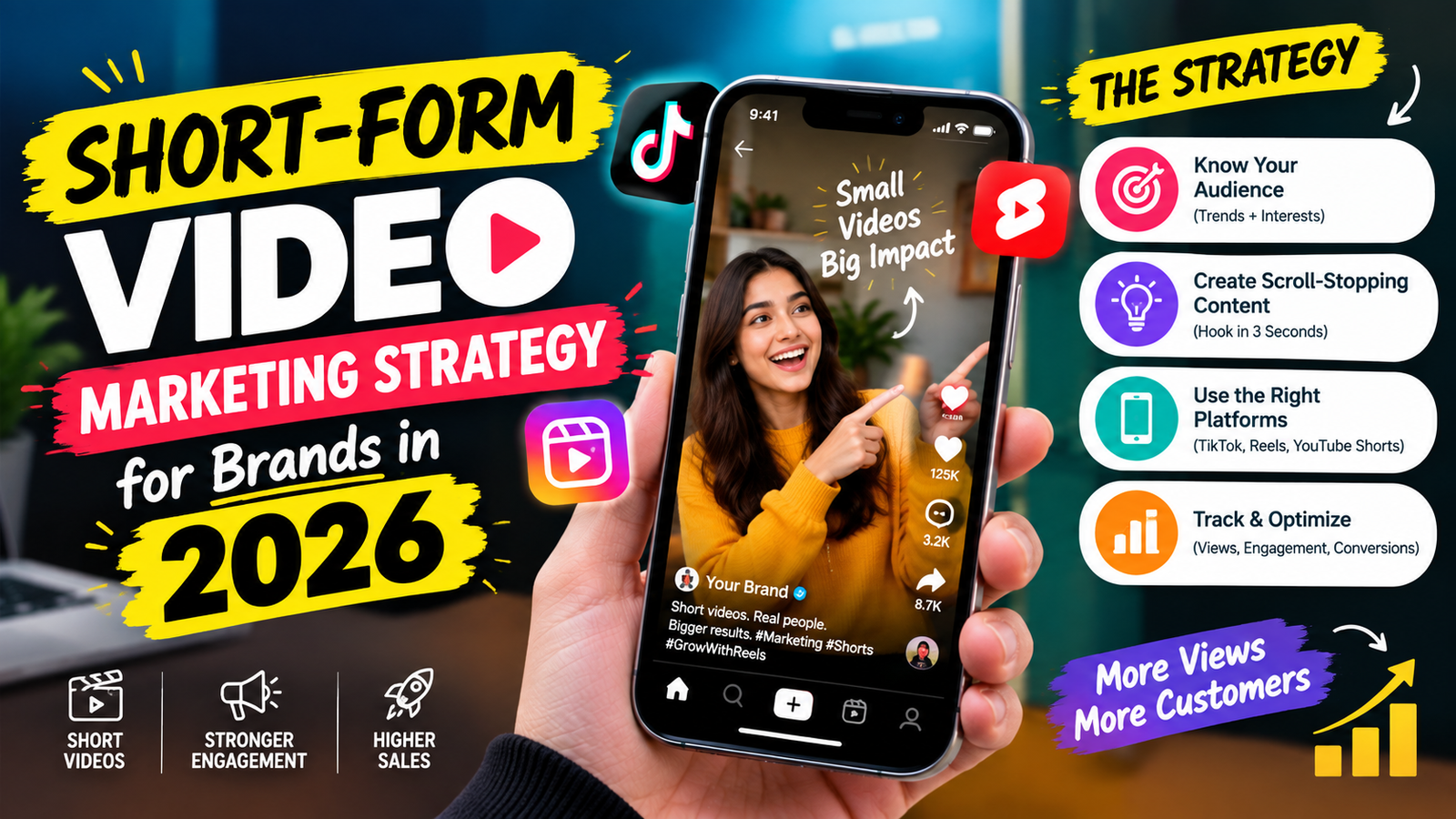
Short-form video has become a major part of digital marketing in 2026. Brands now use quick videos to attract attention, explain products, build communities, and reach potential customers. A strong short-form video marketing strategy can turn a few seconds of content into meaningful engagement, website visits, leads, and sales.
Instagram Reels, YouTube Shorts, and TikTok give businesses multiple ways to distribute short-form content. However, simply posting videos does not guarantee results. Successful brands combine creative ideas with strong hooks, audience research, consistent publishing, and performance tracking.
So, how can businesses create an effective short-form video marketing strategy in 2026? The answer starts with understanding what audiences want to watch and why they choose to keep watching.
What Is Short-Form Video Marketing?
Short-form video marketing involves using brief videos to promote a brand, product, service, or idea. These videos usually focus on one clear message and deliver information quickly.
Popular formats include:
- Instagram Reels
- YouTube Shorts
- TikTok videos
- Product demonstrations
- Tutorials
- Customer testimonials
- Behind-the-scenes content
- Educational videos
- User-generated content
- Quick tips and explainers
Unlike traditional advertising, short-form videos often feel more casual and native to social platforms. A smartphone, good lighting, clear audio, and an interesting idea can be enough to get started.
The real challenge is not production. It is creating content that people genuinely want to watch.
Why Short-Form Video Matters for Brands in 2026
Digital audiences face an enormous amount of content every day. Between social posts, advertisements, articles, emails, and videos, consumers have countless options competing for their attention.
Short-form content fits naturally into this environment because viewers can understand an idea without committing to a long video.
A person waiting for a friend, taking a break, or commuting can easily watch several short videos within a few minutes. That convenience gives brands more opportunities to communicate with audiences throughout the day.
At the same time, short-form video can support several marketing objectives, including awareness, engagement, product education, community building, and conversions.
1. Define Your Target Audience
Every successful short-form video marketing strategy begins with audience research.
Before recording a video, identify the people you want to reach. Consider their interests, problems, questions, preferences, and online behavior.
Ask yourself:
- Who is my ideal customer?
- What problems do they want to solve?
- Which platforms do they use most?
- What type of videos do they enjoy?
- What questions do they frequently ask?
- What could motivate them to purchase?
For instance, a beauty company could focus on skincare routines, ingredient explainers, tutorials, and product demonstrations. A technology brand might create smartphone tips, gadget comparisons, troubleshooting guides, and feature tutorials.
Once the audience is clear, choosing relevant content becomes much easier.
2. Create a Strong Hook
The first few seconds can determine whether someone watches or scrolls.
A compelling hook immediately gives viewers a reason to continue. It might introduce a problem, ask an interesting question, reveal a useful tip, or create curiosity.
Consider openings such as:
- “Before buying your next smartphone, check this.”
- “Three skincare mistakes you may be making.”
- “Here’s a simple way to save time.”
- “Most people don’t know this feature.”
- “Want better results from your Reels?”
Avoid lengthy introductions. Get to the main point quickly.
A strong hook does not need to rely on exaggerated claims. Clear and relevant information can be just as effective.
3. Focus on One Clear Message
Trying to explain too much in one short video can confuse viewers.
Instead, give every video one central purpose.
For example, a beauty brand could create separate videos about:
- How to use the product.
- Its main benefits.
- Common mistakes.
- Customer questions.
- Before-and-after demonstrations.
This approach creates a larger content library while keeping each video focused.
Viewers also know exactly what they will learn or see.
4. Adapt Content to Each Platform
Repurposing content can save time, but brands should avoid treating every platform identically.
Instagram Reels can work well for lifestyle content, tutorials, creator collaborations, fashion, beauty, and visually engaging storytelling.
YouTube Shorts can complement longer YouTube videos and work particularly well for educational content, tips, entertainment, and quick explanations.
TikTok can be useful for trend-driven videos, storytelling, community content, product discovery, and relatable posts.
A single concept can work across all three platforms. However, adjust the hook, captions, editing style, and call to action according to the audience and platform.
5. Mix Educational and Entertaining Content
Not every brand video needs to sound like an advertisement.
People often respond well to content that teaches something useful or provides entertainment.
A balanced content strategy can include four types:
Educational: Share tips, tutorials, facts, and how-to information.
Entertaining: Use humor, storytelling, trends, and relatable situations.
Engaging: Ask questions, invite opinions, and respond to audience discussions.
Product-focused: Demonstrate features, explain benefits, or show products in real situations.
This mix helps maintain variety while keeping the brand visible.
6. Use AI to Support Video Creation
Artificial intelligence is changing how marketers plan and produce short-form content in 2026.
Modern AI tools can assist with:
- Script ideas
- Content planning
- Captions
- Voiceovers
- Subtitles
- Editing
- Translations
- Background removal
- Content repurposing
For example, a marketer can turn a long webinar into several short clips with the help of editing and transcription tools.
Even so, AI should support creativity rather than replace it completely. Human stories, opinions, personality, and original ideas can give branded videos a stronger identity.
7. Create Authentic UGC-Style Videos
User-generated content has become an important format for brands seeking more natural communication.
UGC-style videos can include:
- Product unboxings
- Customer reviews
- First impressions
- Daily routines
- Before-and-after demonstrations
- Creator testimonials
- Product tutorials
These videos often feel less like traditional advertising.
A skincare company, for example, could work with creators to demonstrate how a product fits into a daily routine. A technology company might ask creators to show how they use a device in everyday situations.
Authenticity matters because audiences can quickly recognize overly promotional content.
8. Add Captions and On-Screen Text
Many social media users watch videos without sound. Captions can therefore make your message easier to follow.
Use short phrases rather than large blocks of text. Highlight important information and keep the design easy to read.
On-screen text can also reinforce the main topic of the video.
For example, a Reel about smartphone battery life might open with:
“5 Ways to Improve iPhone Battery Life.”
That headline immediately tells viewers what to expect.
9. Maintain a Consistent Posting Schedule
Consistency gives brands more opportunities to learn what works.
You don’t necessarily need to post multiple times every day. A realistic schedule of three to five videos per week can provide enough content for testing and optimization.
A simple weekly calendar might look like this:
Monday: Educational tip
Wednesday: Product demonstration
Friday: Trend or relatable video
Sunday: FAQ or customer-focused content
Your publishing schedule should match your resources. A sustainable strategy is more useful than an ambitious schedule that becomes difficult to maintain.
10. Use Trends Strategically
Trends can increase visibility, but blindly following every trend isn’t a strategy.
Before using a trending sound, format, or challenge, consider whether it fits your audience and brand identity.
A fashion brand might adapt a trending format to showcase seasonal outfits. A technology company could use a popular storytelling structure to explain a new feature.
The goal is adaptation rather than imitation.
Relevant trends can make content feel current while still communicating something useful.
11. Add a Clear Call to Action
Every marketing video should have a purpose.
Depending on the campaign, you could encourage viewers to:
- Follow the account
- Visit your website
- Save the video
- Share it
- Leave a comment
- Explore a product
- Sign up for a newsletter
- Watch another video
Keep the CTA simple.
For an educational video, asking viewers to save the post may make sense. A product video could instead direct interested viewers toward the product page.
Matching the CTA to the content makes the next step feel natural.
12. Create Content Series
A content series can make short-form video production easier.
Instead of searching for a completely new idea every day, develop recurring themes.
For example:
“Marketing Tip of the Day”
“3-Minute Tech Tips”
“Skincare Mistakes to Avoid”
“Weekly Product Picks”
Series can create familiarity and give audiences a reason to return.
They also make your content calendar easier to manage.
13. Repurpose Long-Form Content
Brands don’t always need to create every short video from scratch.
Existing content can provide plenty of material.
A long YouTube video can become several Shorts. A podcast can produce quote clips. A webinar can generate educational videos. A blog article can become a series of quick explainers.
For example, one 20-minute presentation could produce:
- Five educational clips
- Three FAQ videos
- Two quote videos
- One summary Reel
Repurposing saves production time while helping brands reach audiences across different formats.
14. Track Meaningful Metrics
Views are useful, but they don’t tell the entire story.
A strong short-form video marketing strategy should track metrics such as:
- Watch time
- Completion rate
- Shares
- Saves
- Comments
- Profile visits
- Follows
- Website clicks
- Leads
- Conversions
Suppose one video receives 100,000 views but produces very few website visits. Another receives 30,000 views and generates significant traffic.
The second video may be more useful for a campaign focused on conversions.
Look beyond vanity metrics and connect performance to your actual business goals.
15. Test Different Video Formats
There is no universal formula for viral content.
One audience might respond well to tutorials, while another prefers humor or product comparisons.
Test different approaches, including:
- Talking-head videos
- Screen recordings
- Product demonstrations
- Tutorials
- Interviews
- List videos
- Storytelling
- Customer testimonials
- Behind-the-scenes clips
Keep track of the results.
Over time, patterns can reveal which topics, hooks, and formats resonate most strongly with your audience.
Common Short-Form Video Marketing Mistakes
Brands can lose potential engagement by making a few common mistakes.
Avoid:
- Long introductions
- Weak hooks
- Excessive promotion
- Irrelevant trends
- Poor audio
- Hard-to-read captions
- Inconsistent publishing
- Copying competitors
- Ignoring comments
- Focusing only on views
A short video still needs a clear story.
Even a 15-second clip should have a beginning, a useful or entertaining middle, and a logical ending.
A Simple Short-Form Video Marketing Strategy for 2026
Brands can follow this straightforward process:
Step 1: Research your audience.
Step 2: Choose specific content themes.
Step 3: Research relevant trends and questions.
Step 4: Write short scripts with strong hooks.
Step 5: Record several videos in one session.
Step 6: Add captions and on-screen text.
Step 7: Adapt videos for each platform.
Step 8: Include a relevant call to action.
Step 9: Publish consistently.
Step 10: Analyze performance and improve future content.
This workflow can make content creation more organized without making it unnecessarily complicated.
The Future of Short-Form Video Marketing
Short-form video is likely to remain an important part of digital marketing as platforms continue to prioritize visual discovery and mobile experiences.
AI will make production faster. Creator partnerships will continue to influence brand storytelling. Social commerce will create more opportunities to connect videos with products and services.
Despite these changes, the fundamentals will remain important.
Audiences still want useful information, entertainment, authenticity, and stories that feel relevant to their lives.
Technology can help brands produce content faster, but strong ideas will continue to determine whether people stop scrolling.
Final Thoughts
A successful short-form video marketing strategy for brands in 2026 requires more than frequent posting.
Start by understanding your audience. Then create strong hooks, focus on one message, experiment with different formats, and adapt content to each platform.
AI can make production more efficient, while UGC and creator-led content can add authenticity. Meanwhile, analytics can show which topics and formats deserve more attention.
Most importantly, don’t measure success by views alone. Connect your videos to meaningful goals such as engagement, traffic, leads, and sales.
Short-form video gives brands a powerful way to communicate in a crowded digital environment. With consistent testing and a clear strategy, those few seconds of content can become an important part of a broader marketing plan.