

Introduction
Social media has changed the way people discover products. Instead of searching for a product first, many shoppers now discover something while scrolling through short-form videos, creator content, reviews and recommendations.
That shift has made shoppable videos one of the most interesting developments in social commerce in 2026. A viewer can watch a product demonstration, see how it works, tap a product link and continue toward a purchase without having to remember the product name and search for it later.
The trend is especially important in India. Meta reported in 2026 that short-form video is playing a major role in product discovery, while its India research found that Reels has a strong influence on product discovery and purchase decisions.
So, what exactly are shoppable videos, and why are brands investing more attention in them?
What Are Shoppable Videos?
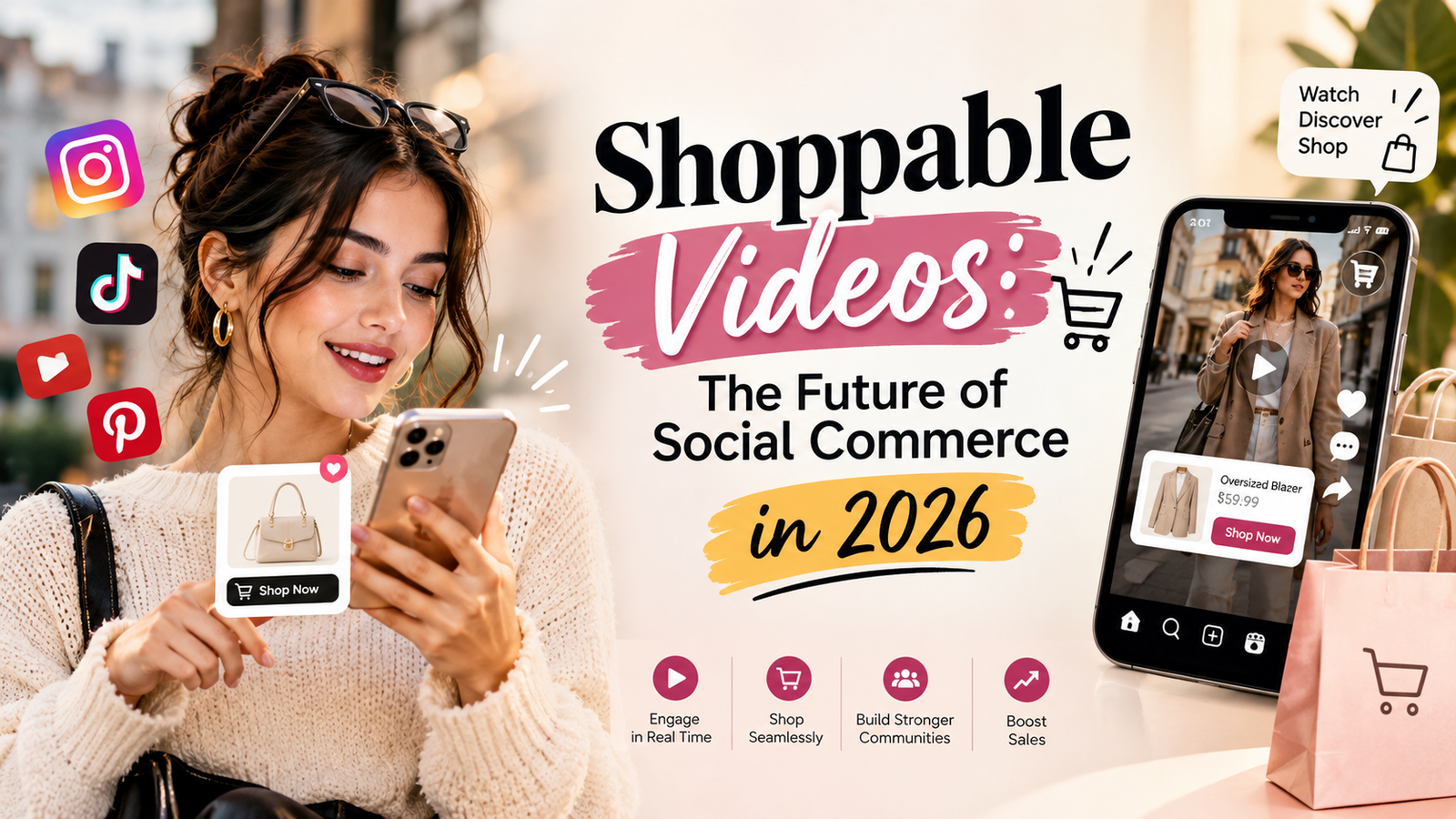
Shoppable videos are video content that includes interactive shopping elements. These can include product tags, links, shopping buttons, product information or calls to action that take viewers toward a purchase.
For example, imagine a beauty creator applying a moisturizer in a Reel. Instead of simply saying, “The link is in my bio,” the video can make the featured product directly accessible.
The same idea works for fashion, electronics, home products, food, fitness products and many other categories.
Traditional product video:
Watch → Remember product → Search → Visit website → Compare → Buy
Shoppable video can shorten the journey:
Watch → Tap product → Shop
This reduction in friction is one reason video commerce has become increasingly important.
Why Shoppable Videos Matter in 2026
Consumers are spending significant amounts of time watching short-form content. At the same time, social platforms are becoming more closely connected with shopping experiences.
Shopify’s 2026 social commerce research highlights creator-driven commerce, short-form video and product discovery as major parts of the changing social shopping environment.
For brands, this means a video is no longer only an awareness tool.
A single piece of content can potentially:
- Introduce a product
- Demonstrate how it works
- Answer a customer question
- Build trust
- Create desire
- Provide a shopping path
That makes video especially useful for ecommerce brands.
Shoppable Videos Reduce the Distance Between Discovery and Purchase
One of the biggest advantages of social commerce is convenience.
People often discover products when they are not actively shopping. A fashion video may introduce a new outfit. A cooking video may demonstrate a kitchen appliance. A creator may show how a smartphone accessory solves a common problem.
If the viewer has to leave the platform and search for the product, interest can disappear.
Shoppable video attempts to capture that interest while it is still fresh.
This does not mean every viewer will purchase immediately. Instead, the technology creates a shorter and more measurable path from content discovery to product consideration.
The Role of Creators
Creators are an important part of shoppable video marketing because they can combine entertainment with product demonstrations.
A traditional advertisement may say:
“This product has three useful features.”
A creator can demonstrate those features naturally.
For example:
“Here is what happened when I used this product for a week.”
That format can feel more practical because viewers see the product in a real-world context.
Creator content can also answer questions that polished advertisements sometimes overlook.
Brands can therefore combine:
Creator + Product + Demonstration + Shopping Link
This creates a powerful content format for social commerce.
Short-Form Video Is Driving Product Discovery
Short-form video has become particularly important for social shopping.
Meta reported in 2026 that 97% of surveyed consumers in its India research watched short-form video daily, while 60% of time spent on Facebook and Instagram was on video.
These figures help explain why ecommerce brands increasingly think about products as video-first experiences.
Instead of creating a product page and separately creating social content, marketers can design videos that introduce the product visually from the beginning.
Types of Shoppable Videos Brands Can Create
There is no single format for shoppable video.
1. Product Demonstration Videos
Show how the product works.
These are especially useful for:
- Electronics
- Beauty products
- Kitchen appliances
- Fitness equipment
- Software
- Home products
2. Tutorial Videos
Teach viewers how to use a product.
For example, a skincare brand can create a morning routine showing several products.
3. Creator Reviews
A creator demonstrates or reviews a product while making it easy for viewers to explore it.
4. User-Generated Content
UGC can show customers using products in everyday situations.
5. Livestream Shopping
Brands and creators can demonstrate products during live broadcasts while viewers interact and shop.
6. Comparison Videos
Comparison content can answer questions such as:
“Which model should you buy?”
This format is particularly useful for technology and consumer electronics.
How to Create an Effective Shoppable Video
Adding a shopping link does not automatically make a video successful.
The content itself still needs to be useful and engaging.
Start with a strong hook.
For example:
“Looking for a TV that works for both gaming and Netflix?”
The viewer immediately understands what problem the video addresses.
Next, demonstrate the product instead of simply describing it.
Then introduce the shopping opportunity naturally.
Finally, use a clear call to action such as:
“Tap the product to see the details.”
Keep the Product Visible
A common mistake is talking about a product without showing it clearly.
Product-focused video should make it easy for viewers to understand:
- What the product looks like
- How large it is
- How it works
- How it is used
- What makes it different
For physical products, close-up shots can be particularly useful.
Make Videos Mobile-Friendly
Most social video is consumed on mobile devices, so brands should prioritize vertical formats for platforms built around short-form video.
Use:
- Large readable text
- Clear visuals
- Short sentences
- Good lighting
- Fast but understandable editing
- Captions
Avoid filling the screen with too many elements.
Use Multiple Videos Instead of One Giant Product Video
Brands often try to explain everything in one video.
That can make content boring.
Instead, create a content series.
For one product, you could produce:
- Product introduction
- Three key features
- How to use it
- Common mistakes
- Customer review
- Product comparison
- Frequently asked questions
Each video can target a different stage of the buyer journey.
Shoppable Videos and SEO
Video can also support product discovery outside social platforms.
Use relevant keywords in:
- Video titles
- Captions
- Descriptions
- Product pages
- On-screen text
- Supporting blog content
For example, instead of a generic title such as “My New TV,” use a descriptive phrase such as “Best 4K Smart TV for Gaming and Netflix.”
The goal is to help both viewers and search systems understand what the content is about.
How AI Is Changing Shoppable Video
AI is making video production faster.
Brands can use AI tools to help with:
- Script ideas
- Product descriptions
- Captions
- Translations
- Content variations
- Creative testing
- Audience segmentation
- Video editing workflows
However, AI should support the creative strategy rather than replace genuine product information.
Consumers still need accurate product details and trustworthy claims.
Challenges Brands Should Consider
Shoppable video also has limitations.
First, not every platform provides identical shopping features.
Second, customers may still prefer to complete purchases on a brand’s website.
Third, tracking can become complicated when a customer discovers a product on one platform but buys later through another channel.
Shopify notes that social commerce in 2026 increasingly requires brands to think about unified commerce, attribution, checkout paths and customer journeys across channels.
Therefore, brands should connect social video analytics with website and ecommerce analytics wherever possible.
The Future of Social Commerce
The future of social commerce is likely to become increasingly video-led.
A shopper may discover a product through a creator, watch a demonstration, ask a question through messaging, visit the product page and complete the purchase.
That means social media is becoming more than an advertising channel.
It is becoming part of the shopping journey itself.
Final Thoughts
Shoppable videos are changing how brands connect entertainment, product discovery and ecommerce. Their biggest advantage is simple: they can make the distance between seeing a product and exploring it much shorter.
In 2026, brands should not think about video only as a way to generate views. They should also consider how video can answer questions, demonstrate products, build trust and guide customers toward the next step.
The brands that combine useful content, creator storytelling, strong product demonstrations and convenient shopping experiences can build a more connected social commerce strategy.