

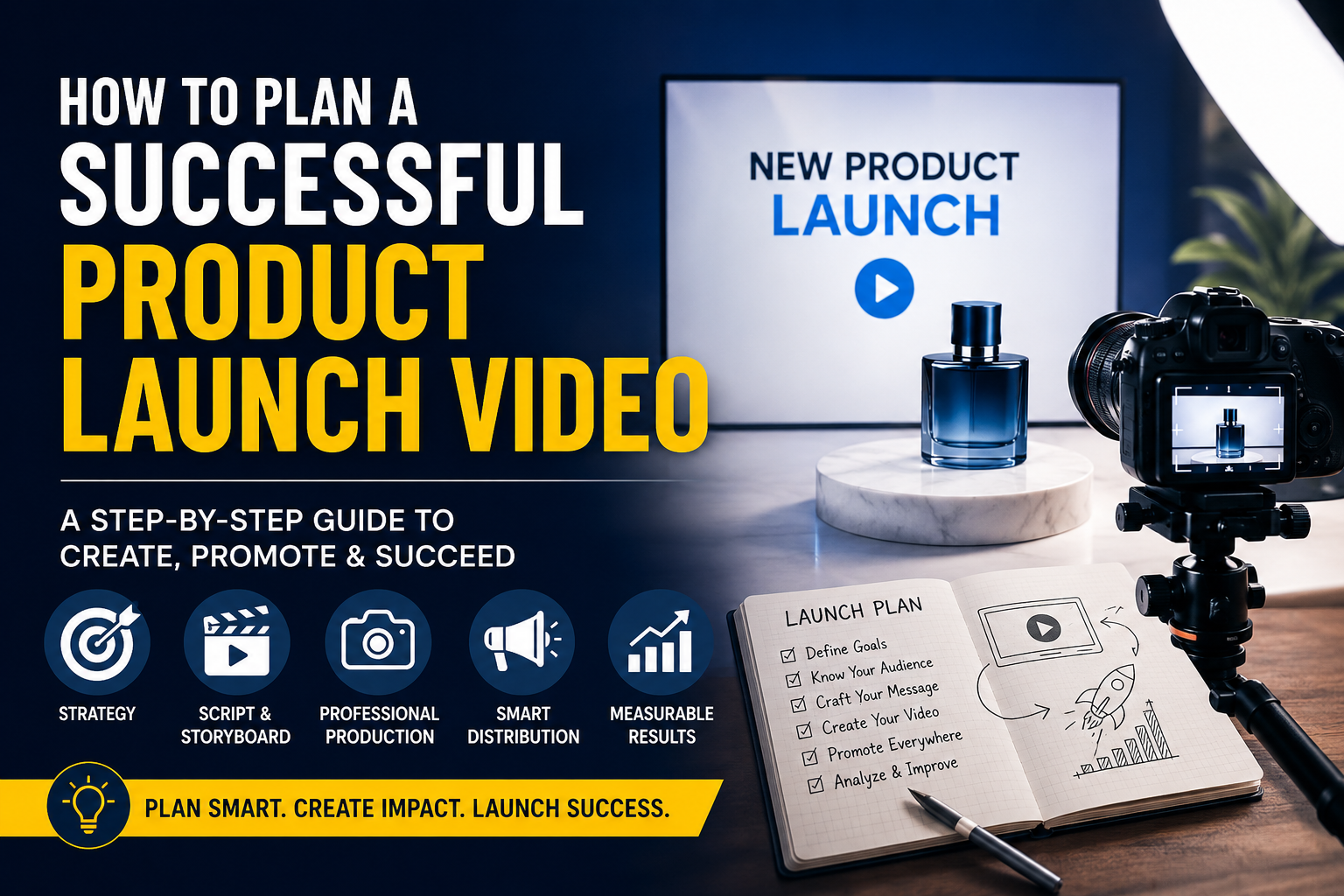
In today’s digital-first marketplace, video has become one of the most effective marketing tools. According to research by the Wyzowl State of Video Marketing Report, consumers are more likely to purchase a product after watching a video that clearly demonstrates its features and benefits.
A successful launch video doesn’t happen by accident. It requires careful planning, compelling storytelling, professional production, and a strategic distribution plan. By following proven Product launch video tips, businesses can create engaging videos that resonate with their target audience and maximize launch success. This guide explains every step involved in creating a product launch video that captures attention, builds brand awareness, and delivers measurable business results.
Why Product Launch Videos Matter
Modern consumers prefer watching videos over reading lengthy product descriptions. A launch video allows businesses to:
- Showcase product features visually
- Explain complex concepts quickly
- Build emotional connections
- Increase brand awareness
- Improve conversion rates
- Generate social media engagement
- Support PR and marketing campaigns
Whether your audience discovers your product on YouTube, LinkedIn, Instagram, Facebook, or your website, video serves as a powerful introduction to your brand.
Define Your Launch Objectives
Before writing a script or setting up cameras, identify what success looks like.
Ask yourself:
- Are you increasing brand awareness?
- Driving product pre-orders?
- Generating leads?
- Educating existing customers?
- Introducing a new feature?
- Entering a new market?
Every creative decision should support these objectives.
For example:
- Awareness campaigns focus on storytelling.
- Sales campaigns emphasize benefits and CTAs.
- Educational launches demonstrate product usage.
Clear objectives keep your production focused.
Understand Your Target Audience
Your video should speak directly to the people most likely to purchase your product.
Research:
- Age group
- Industry
- Interests
- Pain points
- Buying behavior
- Preferred platforms
- Common questions
Instead of talking about product specifications, explain how your product solves real problems.
Customers care more about outcomes than technical features.
Develop a Strong Core Message
Every successful product launch video revolves around one clear message.
Ask:
Why should customers care?
Your message should answer:
- What is the product?
- What problem does it solve?
- Why is it different?
- Why should customers trust you?
- What action should viewers take next?
Avoid overwhelming viewers with excessive information.
Focus on one memorable takeaway.
Create a Compelling Story
People remember stories far more than product specifications.
A simple storytelling structure includes:
Problem
Show the challenge customers experience.
Solution
Introduce your product naturally.
Demonstration
Explain how it works.
Benefits
Highlight real-life improvements.
Call to Action
Encourage viewers to purchase, register, or learn more.
Storytelling creates emotional engagement while making products easier to understand.
Write a Professional Script
The script determines the quality of the final video.
Keep it:
- Clear
- Conversational
- Customer-focused
- Easy to understand
Avoid technical jargon unless your audience expects it.
A typical structure:
Opening Hook
Capture attention within the first 5 seconds.
Example:
“What if you could save three hours every day with one simple solution?”
Problem Statement
Describe customer frustrations.
Product Introduction
Present your product confidently.
Feature Demonstration
Show—not just tell.
Benefits
Explain results rather than specifications.
CTA
Tell viewers exactly what to do next.
Keep the Video Length Appropriate
Product Launch Video, Different platforms require different video lengths.
Recommended durations:
- Social media teaser: 15–30 seconds
- Product announcement: 60–90 seconds
- Website hero video: 1–2 minutes
- Detailed product demo: 3–5 minutes
- Webinar launch: 20–60 minutes
Attention spans are short, so avoid unnecessary scenes.
Plan Visual Elements
Strong visuals communicate professionalism.
Prepare:
- Storyboards
- Shot lists
- Camera angles
- Product close-ups
- Lifestyle scenes
- Brand colors
- Motion graphics
- Screen recordings (if software)
Every visual should reinforce your message.
Highlight Product Benefits
Customers buy benefits—not features.
Instead of saying:
“Includes AI-powered automation.”
Say:
“Automates repetitive tasks so your team saves hours every week.”
Translate technical capabilities into customer value.
Showcase Real Product Demonstrations
Authentic demonstrations build credibility.
Include:
- Product in use
- Real workflows
- Before-and-after comparisons
- User interactions
- Performance examples
Avoid relying solely on animated graphics.
Real footage increases trust.
Use Professional Audio
Poor audio quality can ruin an otherwise excellent video.
Invest in:
- External microphones
- Clean voiceovers
- Background music
- Noise reduction
- Audio mixing
Clear sound improves viewer engagement significantly.
Invest in Quality Lighting
Lighting dramatically affects production value.
Popular setups include:
- Three-point lighting
- Softbox lighting
- Natural window lighting
- LED panels
Good lighting makes products look premium.
Include Brand Identity
Product Launch Video, Maintain consistent branding throughout.
Elements include:
- Logo
- Brand colors
- Typography
- Animations
- Intro sequence
- Outro screen
Consistency strengthens brand recognition.
Add Captions
Many viewers watch videos without sound.
Captions improve:
- Accessibility
- Engagement
- Watch time
- SEO
- Social media performance
Always proofread captions before publishing.
Optimize for Mobile Viewing
Most consumers watch videos on smartphones.
Design for mobile by:
- Using larger text
- Keeping visuals uncluttered
- Avoiding tiny interface elements
- Maintaining readable captions
- Using vertical or square formats when appropriate
Mobile optimization improves user experience.
Create Multiple Versions
One master video can generate several marketing assets.
Repurpose into:
- YouTube version
- Instagram Reel
- TikTok clip
- LinkedIn video
- Facebook ad
- Website hero video
- Email GIF preview
- Product teaser
Repurposing increases marketing ROI.
Build Anticipation Before Launch
Don’t publish your video without preparation.
Generate excitement using:
- Countdown posts
- Email campaigns
- Behind-the-scenes footage
- Influencer partnerships
- Sneak peeks
- Product reveals
Pre-launch buzz increases initial engagement.
Choose the Right Distribution Channels
Publish your launch video where your audience spends time.
Popular platforms include:
- Company website
- Landing pages
- YouTube
- TikTok
- Email newsletters
- Industry forums
- Product Hunt (for startups)
Each platform may require different aspect ratios and video lengths.
Encourage Immediate Action
Every launch video needs a clear CTA.
Examples:
- Buy Now
- Book a Demo
- Start Free Trial
- Learn More
- Join Waitlist
- Download the App
- Contact Sales
Never assume viewers know what to do next.
Measure Performance
Track key performance indicators (KPIs) after launch.
Important metrics include:
- Views
- Watch time
- Audience retention
- Click-through rate
- Conversion rate
- Shares
- Comments
- Leads generated
- Sales attributed
- Return on investment (ROI)
Analytics help improve future campaigns.
Common Product Launch Video Mistakes
Avoid these common pitfalls:
- Focusing only on features
- Weak opening hook
- Poor lighting
- Low-quality audio
- Overly long videos
- No storytelling
- No customer perspective
- Missing CTA
- Publishing without promotion
- Ignoring analytics
Learning from these mistakes improves campaign performance.
Product Launch Video Planning Checklist
Before publishing, confirm that you have:
- Defined launch goals
- Identified your target audience
- Written a compelling script
- Created a storyboard
- Planned visuals
- Recorded high-quality footage
- Captured clean audio
- Added captions
- Included branding
- Optimized for mobile
- Created multiple versions
- Scheduled distribution
- Prepared promotional campaigns
- Added a strong CTA
- Set up analytics tracking
A structured checklist helps ensure nothing is overlooked.
Future Trends in Product Launch Videos
As technology evolves, product launch videos are becoming more interactive and personalized. Businesses are increasingly using AI-assisted editing, 3D product visualization, augmented reality (AR), and personalized video experiences to capture audience attention. Interactive videos that allow viewers to explore product features, choose different viewing paths, or instantly book demos are expected to become more common. Additionally, short-form vertical videos optimized for platforms like Instagram Reels, TikTok, and YouTube Shorts will continue to play a major role in product launches, complementing longer, in-depth explainer videos.
Companies that embrace these innovations while maintaining authentic storytelling and customer-focused messaging will be better positioned to stand out in competitive markets.
Conclusion
A successful product launch video is much more than an attractive promotional asset—it’s a strategic communication tool that introduces your product, demonstrates its value, and motivates customers to take action. From defining objectives and understanding your audience to crafting a compelling narrative, investing in high-quality production, and distributing the video across the right channels, every stage contributes to the success of your launch.
When executed effectively, a product launch video can increase brand awareness, generate qualified leads, boost customer confidence, and accelerate sales. By following the planning strategies outlined in this guide, businesses of all sizes can create launch videos that not only capture attention but also deliver lasting business results.