
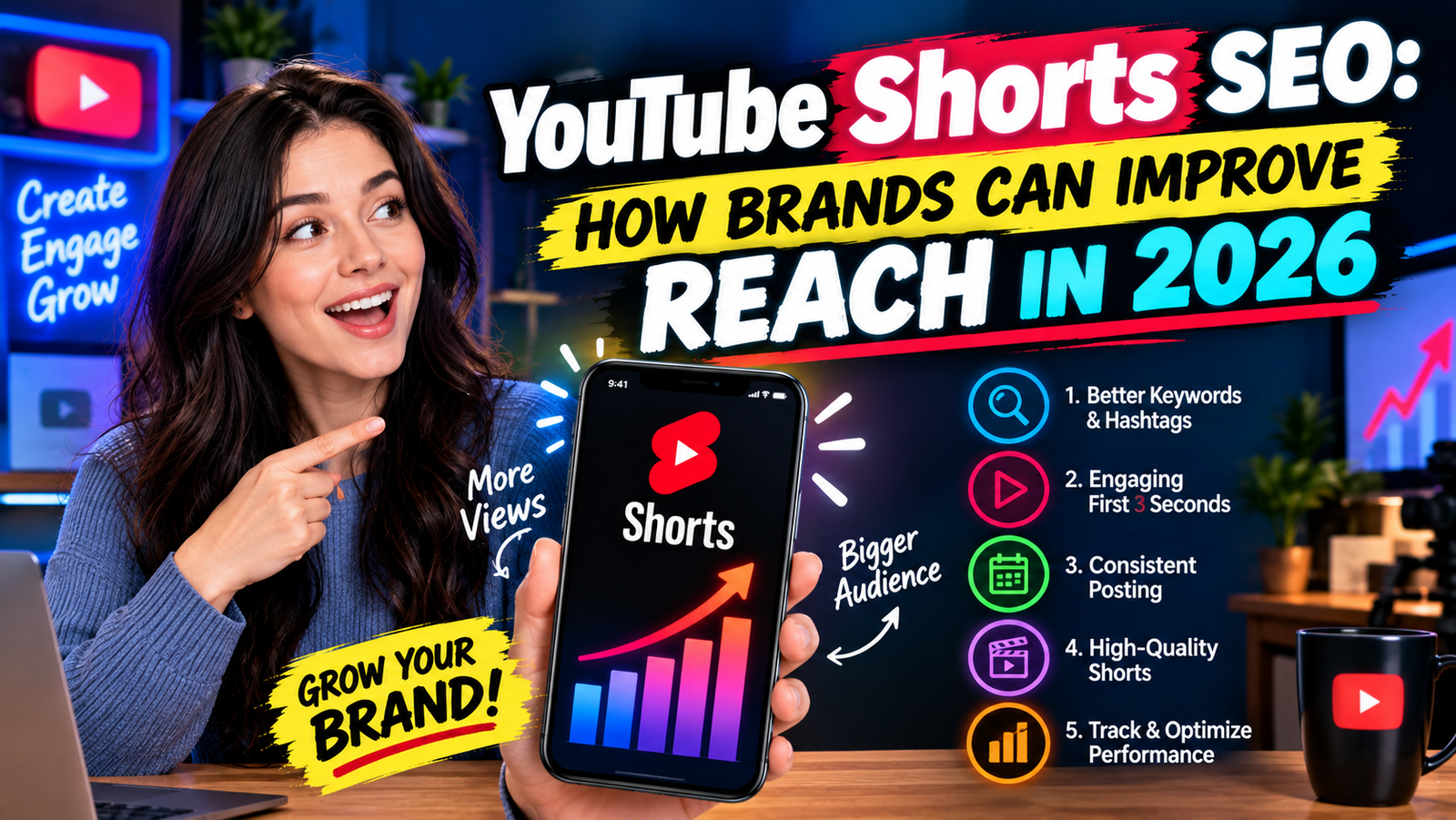
Short-form video has become an important part of digital marketing, and YouTube Shorts gives brands another way to reach viewers without producing long-form videos for every campaign. In 2026, brands can use YouTube Shorts SEO to make their short videos easier to understand, discover, and connect with relevant audiences.
SEO for Shorts is different from traditional website SEO. Brands need to think about the video’s topic, title, description, spoken content, visual context, viewer engagement, and overall audience experience. A strong strategy also requires consistency because publishing one optimized Short rarely creates a sustainable content strategy.
The good news is that brands do not need complicated techniques to improve their Shorts strategy. A combination of useful topics, strong openings, clear metadata, accessible captions, and audience-focused content can create a more organized approach to YouTube Shorts marketing.
What Is YouTube Shorts SEO?
YouTube Shorts SEO refers to the process of optimizing short-form videos so that YouTube can better understand their topic and connect them with potentially interested viewers.
Unlike traditional search engines, YouTube evaluates many signals when distributing video content. Search relevance, viewer behavior, engagement, satisfaction, and content quality can all influence how videos are discovered.
For brands, SEO should therefore focus on clarity rather than keyword stuffing.
The goal is simple: create a Short that clearly communicates what it is about and provides enough value to make viewers want to watch.
1. Start With the Right Keyword
Keyword research remains useful for YouTube Shorts.
Before creating a video, identify phrases that your target audience might actually search for or use when describing the problem they want to solve.
For example, a skincare brand could target phrases such as “morning skincare routine,” “sunscreen for oily skin,” or “how to apply vitamin C serum.”
A technology brand might focus on phrases such as “phone battery tips,” “AI smartphone features,” or “best laptop features.”
The keyword should match the actual content. Using a popular phrase that has little connection to your video may attract the wrong audience.
2. Create a Strong Hook
Short videos have limited time to capture attention.
The first few seconds should quickly communicate why the viewer should continue watching.
Instead of beginning with a long introduction, brands can start with a question, surprising fact, problem, demonstration, or clear promise.
For example:
Weak opening:
“Hi everyone, today we are going to talk about some useful smartphone tips.”
Stronger opening:
“Your phone may be draining its battery because of these three settings.”
The second version immediately communicates the topic and gives viewers a reason to continue.
A strong hook can also reinforce the video’s main keyword naturally.
3. Use Clear and Descriptive Titles
The title helps viewers understand what a Short is about.
Brands should create concise titles that accurately describe the content while naturally incorporating the primary keyword.
For example:
- “3 AI Smartphone Features You Should Try”
- “How to Save Phone Battery in 2026”
- “Easy Morning Skincare Routine”
- “5 Smart Home Energy-Saving Tips”
Avoid stuffing several unrelated keywords into one title.
A clear title is usually more useful than a title designed solely to include as many search phrases as possible.
4. Optimize the Description
Shorts may be brief, but the description can still provide useful context.
Use the description to explain what the video covers and include relevant keywords naturally.
For example, a technology brand could write:
“Discover three AI smartphone features that can make everyday tasks easier, from smart photo editing to on-device AI tools.”
The description should sound natural rather than like a list of keywords.
Brands can also use descriptions to provide relevant links or additional information when appropriate.
5. Add Relevant Hashtags
Hashtags can help categorize content and provide additional context.
Brands should focus on a small number of highly relevant hashtags instead of filling the description with dozens of unrelated terms.
For a video about AI smartphones, relevant hashtags could include:
#AISmartphones #SmartphoneTips #Tech2026
For a beauty video:
#SkincareTips #Beauty2026 #SkincareRoutine
The most important part is relevance. Hashtags should support the video’s topic rather than replace good content.
6. Use Captions and On-Screen Text
Many viewers watch short videos without sound.
Captions and on-screen text can make content easier to understand while also reinforcing the main topic.
Brands can highlight important points, product features, statistics, or instructions using short text overlays.
AI captioning tools can speed up the process, but captions should always be checked for errors.
Readable text also matters. Avoid extremely small fonts, excessive words, or backgrounds that make text difficult to see.
7. Say Important Keywords Naturally
YouTube can use information from the video’s audio and other content signals to understand what a video is about.
That means creators should naturally mention the main topic while speaking.
If your Short is about “AI PC features,” for example, you can naturally say:
“Here are three AI PC features that can actually improve everyday productivity.”
There is no need to repeat the phrase repeatedly.
Natural language makes the video easier for viewers to follow and helps keep the content focused.
8. Create Content Around Search Intent
One of the most useful YouTube Shorts SEO strategies is understanding why someone would search for a topic.
People may be looking for:
- A quick answer
- A product comparison
- A tutorial
- A recommendation
- A solution to a problem
- An explanation
- A demonstration
Brands should create Shorts that directly satisfy that intent.
For example, instead of making a generic video about smartphones, a brand could create a Short answering “Why is my phone battery draining so quickly?”
The more clearly the video solves a specific problem, the easier it becomes to create focused content.
9. Turn Long Videos Into Shorts
Brands do not always need to create completely new videos.
Existing long-form videos can provide material for Shorts.
A 15-minute product review could become several short videos covering individual features. A webinar could produce short educational clips. A tutorial could become multiple quick tips.
AI video-repurposing tools can help identify potential clips, but human editing remains important.
Each Short should make sense on its own rather than feeling like an incomplete section of a longer video.
10. Build Topic Clusters
Instead of publishing random Shorts, brands can organize content into topic clusters.
For example, a technology brand could create a series around smartphone battery life:
Short 1: Why Your Phone Battery Drains Quickly
Short 2: Three Settings That Save Battery
Short 3: Fast Charging Mistakes to Avoid
Short 4: How to Check Battery Health
Short 5: Battery-Saving Tips for Travel
This approach gives the channel a clearer content direction.
It can also help brands build a library of related videos around topics their audience cares about.
11. Study Audience Retention
Views are not the only metric brands should monitor.
Audience retention can help reveal whether viewers continue watching or leave early.
If many viewers leave during the introduction, the opening may need improvement.
If viewers consistently watch until the final seconds, the structure may be working well.
Brands can use these insights to experiment with hooks, pacing, video length, storytelling, and presentation.
Analytics should guide experimentation rather than encourage brands to copy every temporary trend.
12. Encourage Meaningful Engagement
Engagement can provide useful signals about how audiences interact with content.
Instead of simply saying “Like and subscribe,” brands can ask a relevant question.
For example:
“Which smartphone feature do you use most?”
or
“Would you try this AI tool?”
Questions connected directly to the topic can encourage genuine responses.
Brands should also respond to relevant comments when appropriate. Conversations can provide ideas for future Shorts and help businesses understand audience questions.
13. Maintain a Consistent Publishing Strategy
Consistency matters more than randomly uploading large numbers of videos.
A brand could publish a few Shorts each week around clearly defined topics.
The exact publishing frequency should depend on available resources and audience response.
Quality should remain important. Publishing several low-value videos simply to increase upload volume can make a channel less useful to viewers.
A manageable schedule makes it easier to maintain quality over time.
Common YouTube Shorts SEO Mistakes
Brands should avoid several common mistakes.
Keyword stuffing: Repeating the same keyword unnecessarily can make titles and descriptions look unnatural.
Weak introductions: Long introductions can lose viewers before the main point appears.
Irrelevant hashtags: Unrelated hashtags can make the content less focused.
Misleading titles: A title should accurately represent the video.
Poor captions: Spelling and transcription errors can reduce clarity.
Ignoring analytics: Brands should learn from actual audience behavior instead of relying entirely on assumptions.
Copying trends without context: A trend only works when it fits the brand and its audience.
YouTube Shorts SEO Checklist for Brands
Before publishing a Short, ask:
- Does the video have one clear topic?
- Is the primary keyword relevant?
- Does the opening create immediate interest?
- Is the title descriptive?
- Is the description natural and useful?
- Are the hashtags relevant?
- Are captions accurate?
- Is the on-screen text easy to read?
- Does the video answer a specific question or solve a problem?
- Have previous analytics been considered?
This simple checklist can make the publishing process more consistent.
Final Thoughts
YouTube Shorts SEO in 2026 is less about stuffing keywords into a video and more about making content clear, useful, relevant, and easy for both viewers and YouTube to understand.
Brands can improve their Shorts strategy by researching relevant topics, creating strong hooks, using descriptive titles, adding accurate captions, optimizing descriptions, and organizing videos around audience needs.
Repurposing long-form content can also make production more efficient, while analytics can reveal which topics and formats deserve further experimentation.
Most importantly, SEO should support good content rather than replace it. A well-optimized Short may help people discover a brand, but useful information, strong storytelling, and a satisfying viewing experience are what can turn that discovery into continued audience interest.