
Introduction
A great video can provide valuable information, solve a problem, or entertain viewers. However, people need to discover and click on that video before any of those benefits matter. This is why learning how to optimize video titles for search and clicks is an important part of video marketing.
Your video title has two major jobs. First, it should help platforms understand what your content is about. Second, it should give viewers a reason to click and watch.
A title that is optimized only for search may sound boring. On the other hand, a highly creative title that does not clearly communicate the topic may struggle to attract search traffic. The goal is to find the right balance between SEO, clarity, relevance, and curiosity.
Why Video Titles Matter for SEO
Video platforms and search engines use various signals to understand and organize content. Titles are one of the most visible pieces of information associated with a video.
A clear title tells both the platform and the viewer what they can expect.
For example, compare these two titles:
“My New Marketing Strategy”
and
“Video Marketing Strategy for Small Businesses in 2026”
The second title provides much more context. It tells viewers the subject, target audience, and current time frame.
When creating videos, think about the words your audience might actually type into a search bar. Those phrases can help you develop a title that aligns with real search behavior.
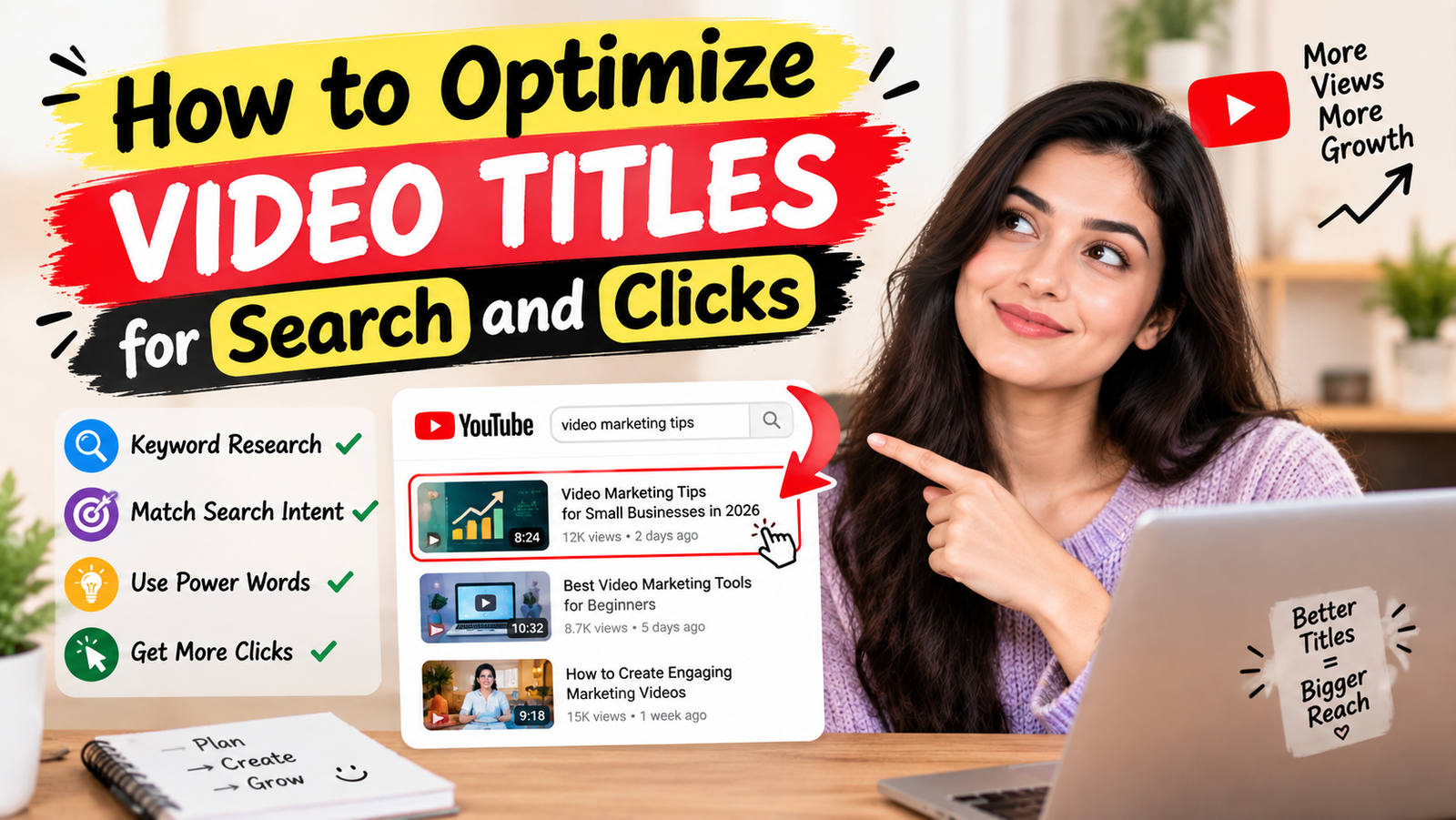
Start With Keyword Research
Before writing your title, identify the main keyword related to your video.
Suppose your video explains how businesses can use Instagram Reels. Potential keywords might include:
- Instagram Reels marketing
- Instagram Reels SEO
- Reels marketing strategy
- how to use Instagram Reels for business
Choose a keyword that accurately represents the video’s main topic.
Avoid selecting a keyword simply because it appears popular. Relevance matters. If the keyword does not match your video, viewers may leave quickly after clicking, which can create a poor viewing experience.
Put the Main Keyword Near the Beginning
One simple video SEO technique is to place the primary keyword toward the beginning of your title when it sounds natural.
For example:
“Instagram Reels SEO: How to Get More Views in 2026”
This works better for clarity than hiding the main topic at the end of a long title.
Another example is:
“Video Marketing ROI: How to Measure Your Results”
The viewer immediately knows what the video covers.
However, do not force keywords into awkward sentences. A natural title is more appealing than one written only for algorithms.
Match Search Intent
Keywords tell you what people search for, while search intent helps you understand why they search.
Consider the keyword:
“video marketing tools”
Someone using this search may want recommendations or comparisons.
A suitable title could be:
“10 Best Video Marketing Tools for Businesses in 2026”
Now consider:
“how to create a video marketing strategy”
This search indicates tutorial intent.
A better title would be:
“How to Create a Video Marketing Strategy Step by Step”
Matching the title to the searcher’s intention makes the content more relevant.
Make Your Title Clear
Clarity should come before cleverness.
Viewers should understand the subject of your video without having to guess.
Avoid vague titles such as:
“You Need to See This!”
While this might create curiosity, it provides almost no information about the actual content.
Instead, consider:
“5 Video Marketing Mistakes That Can Reduce Your Conversions”
The second version still creates curiosity while explaining the topic.
A useful rule is simple: tell viewers what the video is about and give them a reason to care.
Add a Strong Benefit
People click on videos because they expect something useful from them.
Your title can communicate that benefit.
For example:
“How to Edit YouTube Videos Faster: 7 Time-Saving Tips”
The benefit is clear. The viewer expects to learn ways to save time.
Other useful benefit words include:
- Learn
- Improve
- Increase
- Save
- Create
- Grow
- Avoid
- Fix
- Discover
- Build
Use these words naturally rather than adding them simply for attention.
Use Numbers When They Fit
Numbers can make titles easier to scan.
For example:
“7 Video SEO Mistakes You Should Avoid in 2026”
is immediately understandable.
List-based titles work particularly well for tutorials, tips, tools, mistakes, and strategies.
However, avoid adding a number unless the video genuinely contains that number of useful points. The title should accurately represent the content.
Create Curiosity Without Clickbait
Curiosity can encourage clicks, but misleading titles can damage trust.
Compare:
“This One Trick Will Make Every Video Go Viral!”
with:
“5 Video Hook Techniques That Can Improve Viewer Retention”
The first title makes an unrealistic promise. The second creates interest while remaining specific.
Good curiosity gives viewers a reason to learn more. Clickbait makes promises that the content cannot support.
Always make sure your video delivers what the title promises.
Use Current-Year Keywords Carefully
Adding the year can make certain titles feel more relevant, especially for topics that change frequently.
For example:
“Best Video Marketing Tools in 2026”
or
“YouTube SEO Tips for 2026”
This approach works particularly well for software, technology, social media, AI, marketing strategies, and product-related topics.
However, don’t add the year automatically. Evergreen topics may not need it.
Keep Titles Concise
Long titles can become difficult to read, especially on mobile devices.
Try to communicate the main idea without unnecessary words.
Instead of:
“A Complete and Detailed Guide Explaining Everything You Need to Know About How to Create Better Marketing Videos”
use:
“How to Create Better Marketing Videos: Complete Guide”
The shorter version communicates the same general idea much faster.
Include Relevant Long-Tail Keywords
Long-tail keywords are specific phrases containing several words.
Examples include:
- video marketing for small businesses
- how to optimize YouTube videos
- best video marketing tools for beginners
- Instagram Reels SEO tips for businesses
These phrases can help you target specific search intent.
For example:
“YouTube SEO for Beginners: How to Optimize Your Videos”
is more targeted than simply:
“YouTube SEO.”
Specific titles can attract viewers looking for exactly that information.
Use Power Words Carefully
Certain words can make titles more compelling.
Examples include:
- Complete
- Essential
- Proven
- Simple
- Practical
- Beginner
- Ultimate
- Effective
- Step-by-Step
- Powerful
For example:
“A Practical Guide to Video Marketing ROI”
sounds more useful than:
“Video Marketing ROI.”
Still, avoid exaggerated words that promise unrealistic results.
Optimize Titles for Mobile Viewers
Many people discover videos on smartphones.
A title that looks perfect on a desktop may appear truncated on a smaller screen.
Put the most important information near the beginning.
For example:
“Instagram Reels SEO: 7 Ways to Get More Views in 2026”
is stronger than:
“7 Powerful and Effective Strategies That Every Business Owner Should Know About Instagram Reels SEO in 2026.”
The first version communicates the topic immediately.
Test Different Title Formats
There is no single title formula that works for every video.
Experiment with different approaches.
How-To Titles
How to Create High-Converting Product Videos
List Titles
10 Video Marketing Tips for Small Businesses
Problem-Solution Titles
Why Your Videos Get Views but No Sales
Comparison Titles
YouTube Shorts vs Instagram Reels: Which Is Better for Marketing?
Guide Titles
Video SEO Guide: How to Get Your Videos Discovered
Testing different formats can help you understand what your audience responds to.
Common Video Title Mistakes
Avoid these common problems when optimizing your titles.
Keyword stuffing: Repeating the same keyword makes titles unnatural.
Misleading claims: Never promise something your video cannot deliver.
Being too vague: Viewers should understand the subject immediately.
Making titles too long: Remove unnecessary words.
Ignoring search intent: Match the title with what the viewer wants.
Copying competitors: Study successful titles for ideas, but create original angles.
Forgetting the audience: A title should speak to the people you want to reach.
A Simple Video Title Formula
You can use this basic formula:
Primary Keyword + Benefit/Curiosity + Specific Detail
For example:
“Video Marketing ROI: How to Measure Your Results in 2026”
Another formula is:
How to + Desired Result + Specific Audience
For example:
“How to Create Better Marketing Videos for Small Businesses”
These formulas provide a starting point, but creativity and relevance still matter.
Final Thoughts
Learning how to optimize video titles for search and clicks is an important part of a successful video marketing strategy. Your title needs to satisfy two audiences at once: the search system that needs to understand your topic and the human viewer deciding whether your video is worth watching.
Start with keyword research and understand search intent. Place your main keyword naturally near the beginning when possible. Make the benefit clear, use numbers when appropriate, create curiosity without misleading viewers, and keep the title concise enough for mobile audiences.
Most importantly, make sure your video delivers what the title promises.
A strong title cannot fix weak content. However, when a relevant keyword, clear search intent, compelling wording, and valuable content work together, your video has a better foundation for attracting the right viewers and building long-term visibility.