

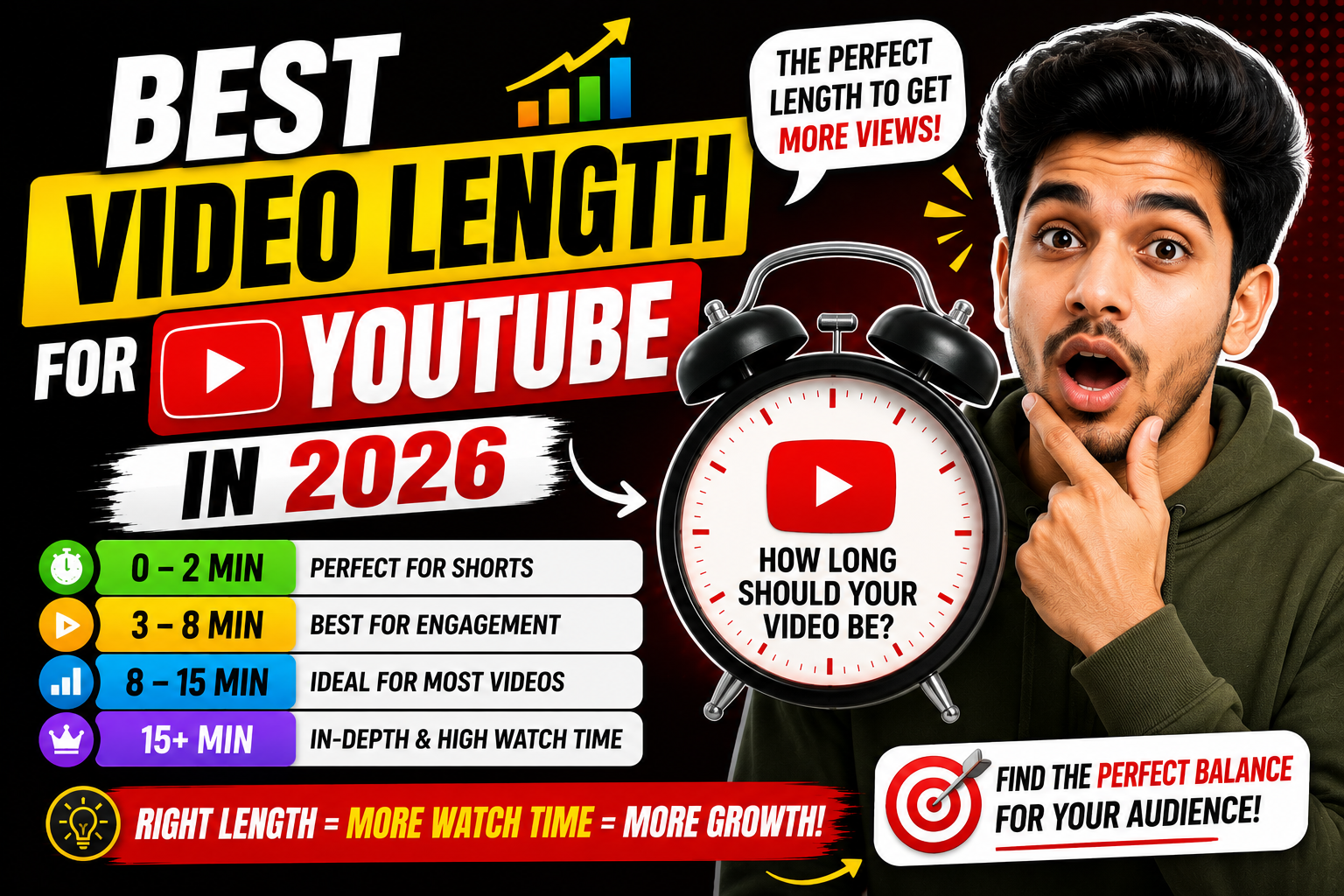
Best Video Length for YouTube in 2026 is one of the most common questions among new and experienced creators. Should a YouTube video be 5 minutes, 10 minutes, 15 minutes or even longer? Does YouTube prefer longer videos because they generate more watch time? Or can short videos perform just as well?
The answer may surprise you: there is no single ideal YouTube video length in 2026. YouTube says creators should make videos only as long as necessary to deliver the intended value and avoid adding filler simply to make a video longer. The platform also recommends using audience-retention data to understand how long viewers are willing to watch.
That means the best YouTube video length isn’t determined by a magic number. Instead, it depends on your content type, audience, topic, storytelling and viewer retention.
Let’s explore how long your videos should actually be in 2026.
What Is the Best Video Length for YouTube in 2026?
There is no universal answer.
A five-minute tutorial can be more successful than a 20-minute tutorial if it solves the viewer’s problem quickly. Similarly, a 30-minute documentary can perform better than a five-minute version if the subject requires deeper storytelling.
YouTube’s recommendation guidance specifically says there is no optimal length that works for every video. Creators should aim for the precise length needed to communicate the information or entertainment value effectively.
So instead of asking:
“What is the perfect YouTube video length?”
ask:
“How long does my audience need to get the value they clicked for?”
That is the more useful question.
Why Video Length Matters for YouTube SEO
Video length itself isn’t a magic SEO ranking factor. Instead, YouTube considers how viewers respond to content, including whether they choose to watch, continue watching and find the experience satisfying. The recommendation system also considers signals related to appeal, engagement and satisfaction.
For search and discovery, YouTube considers factors such as relevance and engagement. Both absolute and relative watch time can provide useful information about viewer engagement. Generally, relative watch time can be more important for shorter videos, while absolute watch time becomes more significant as videos get longer.
This creates an important balance. A longer video can generate more total watch time, but only when viewers remain engaged. On the other hand, a shorter video may achieve a higher percentage viewed while still needing to provide enough value to satisfy the audience.
Why Longer Videos Don’t Automatically Get More Views
One common misconception among creators is that longer videos always perform better. In reality, YouTube does not reward a video simply because it has more minutes.
Consider two hypothetical videos. The first is 10 minutes long and receives an average view duration of four minutes. The second runs for 20 minutes and receives an average view duration of five minutes.
Although the longer video generates more average watch time per viewer, that alone does not guarantee better performance. Other factors can influence how a video performs, including viewer satisfaction, topic relevance, engagement, title, thumbnail and how audiences respond when the content is recommended.
How to Increase YouTube Audience Retention
Improving audience retention starts with giving viewers a strong reason to continue watching. A clear opening hook can immediately communicate what they will gain from the video.
Another effective strategy is removing unnecessary information. Long introductions, repeated explanations and irrelevant sections can cause viewers to leave before reaching the most valuable part.
Visual variety can also help maintain attention. Use B-roll, screenshots, graphics, camera-angle changes or on-screen text when appropriate.
Finally, examine your YouTube Analytics data regularly. Retention graphs can show exactly where viewers lose interest and which sections keep them engaged.
How to Find Your Channel’s Ideal Video Length
Start by testing different video-length ranges instead of choosing one duration for every upload. For example, you could compare videos between 5–8 minutes, 8–15 minutes and 15–25 minutes.
Next, create videos covering similar subjects so that your comparison is meaningful. Completely different topics can attract very different viewing behavior.
After publishing, study metrics such as average view duration, average percentage viewed, audience retention and watch time. These numbers can reveal whether your audience prefers concise explanations or longer, detailed content.
Over time, patterns will become easier to identify. Use those insights to adjust your future videos rather than following a fixed length simply because another creator recommends it.
Final Thoughts
So, what is the best video length for YouTube in 2026? There is no universal magic number that guarantees more views or higher rankings.
YouTube’s own guidance emphasizes creating videos that are long enough to deliver the intended value without adding unnecessary filler. A useful five-minute tutorial can outperform a padded 15-minute video if it answers the viewer’s question more effectively.
For creators, the smartest approach is to focus on viewer satisfaction, audience retention, strong hooks and valuable content. Let the topic determine the length instead of forcing every video into the same time frame.
Ultimately, successful YouTube videos are not measured by minutes alone. What matters most is whether viewers click, stay engaged and feel that the video was worth watching.
The right video length is the one that delivers maximum value without unnecessary content.