
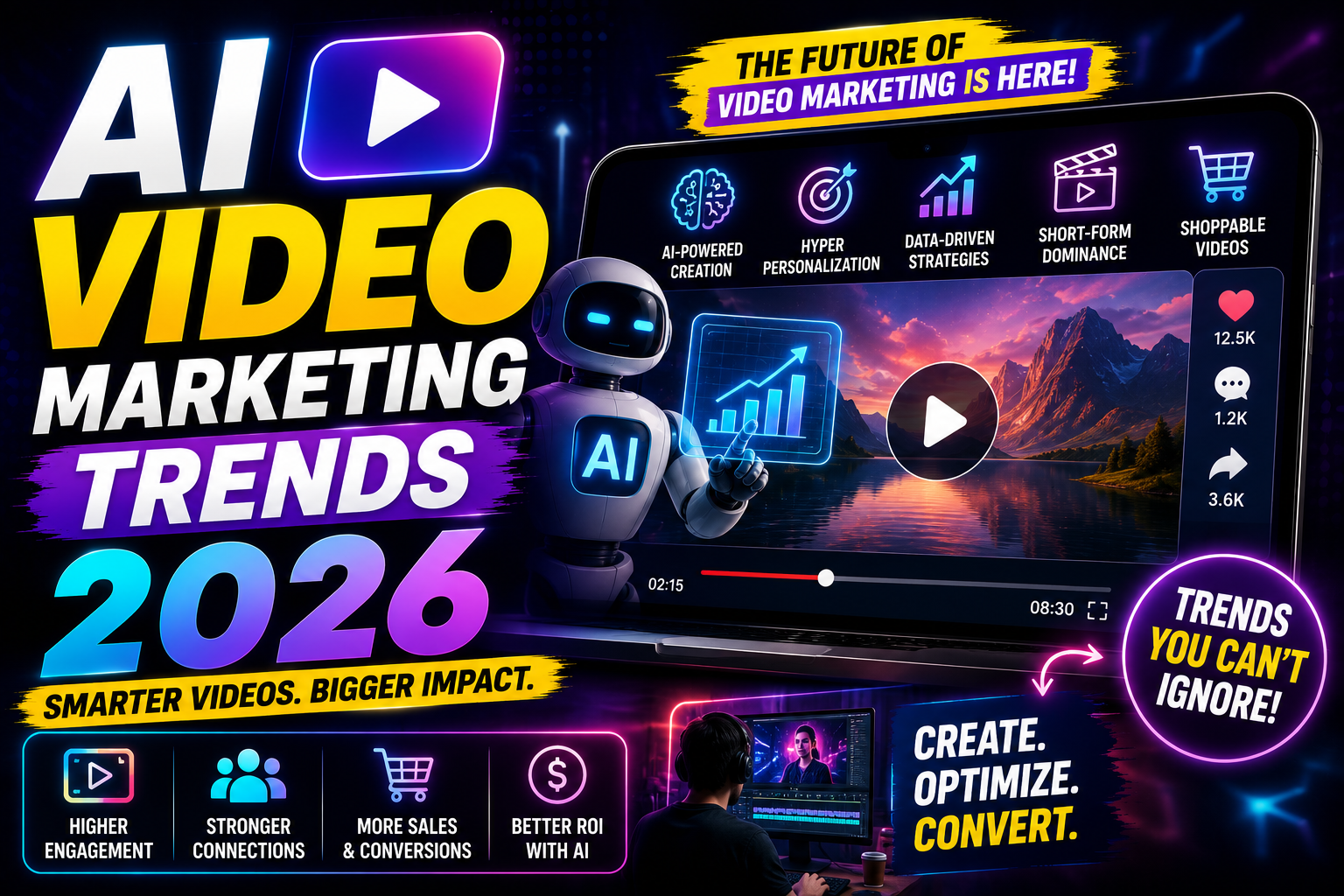
Video marketing is entering a new phase in 2026. Artificial intelligence is no longer limited to writing captions, generating ideas or assisting with simple editing. Instead, brands can now use AI throughout the video creation process, from developing scripts and generating visuals to personalizing campaigns and creating multiple versions for different audiences.
At the same time, viewers are becoming more selective. A video may be technically impressive, yet still fail if it feels repetitive, unnatural or overly promotional. Therefore, successful AI video marketing in 2026 is not simply about creating more content. It is about combining technology with creativity, relevance and human storytelling.
Current industry research also points toward a broader shift. Short-form video remains important, creator and UGC-style content continues to influence audiences, while AI is increasingly becoming part of everyday video production.
So, what should marketers pay attention to this year?
1. AI-Generated Videos Become Part of Everyday Marketing
One of the biggest AI video marketing trends in 2026 is the growing use of generative video.
Marketers can now experiment with text-to-video, image-to-video and AI-assisted visual creation. Instead of arranging a traditional shoot for every creative idea, teams can generate concepts much faster.
For example, a travel brand could create several visual concepts for different destinations. Likewise, an e-commerce company could produce multiple product-focused creatives for different campaigns.
However, speed creates a new challenge. When everyone can generate content quickly, originality becomes even more important.
Therefore, brands should use AI to accelerate production while keeping human creative direction at the centre.
2. Short-Form AI Video Remains a Major Growth Channel
Short-form video continues to dominate social platforms.
Instagram Reels, YouTube Shorts and TikTok-style content give brands an opportunity to reach viewers quickly. Consequently, marketers need a steady supply of engaging vertical videos.
AI can make that process easier.
A single campaign can be transformed into several versions with different:
- Hooks
- Captions
- Visuals
- Calls to action
- Product benefits
- Languages
- Target audiences
This approach allows brands to experiment without creating every video from scratch.
However, the first few seconds still matter enormously. A strong idea and clear hook should come before AI production.
3. AI-Powered Video Personalization Takes Off
Personalization is moving beyond adding someone’s name to an email.
In 2026, brands can create different video experiences for different customer groups. AI makes these variations easier to produce at scale.
For example, a fitness company could create separate videos for beginners, runners and strength-training enthusiasts. The product may remain the same, but the examples, language and opening message can change.
This approach makes the content feel more relevant.
Moreover, personalization can be applied at different stages of the customer journey. New customers may need educational videos, while existing customers may respond better to tutorials or product upgrades.
Therefore, AI video personalization is becoming an important part of performance marketing.
4. AI UGC Videos Become More Popular
User-generated content has become popular because it often feels more natural than traditional advertising.
Now, brands are experimenting with AI UGC videos, including AI avatars, synthetic voices and creator-style formats.
The attraction is obvious. AI can help marketers create more variations without organizing a new shoot for every version.
However, authenticity should not be ignored.
A synthetic presenter should not be presented as a real customer who personally used a product when that experience never happened. Such practices can damage trust and create advertising concerns.
Instead, brands should use AI transparently and focus on useful storytelling.
Creator-style content is already a major 2026 trend, with short-form UGC being used across organic and paid campaigns.
5. AI Avatars Become Useful for Business Videos
AI avatars are another important development.
A company can create a digital presenter to deliver educational or promotional information without recording a person for every video.
This can be particularly useful for:
- Product tutorials
- Online courses
- Training videos
- Company updates
- Customer education
- Software demonstrations
- Multilingual content
For international businesses, avatars can also support localized video campaigns.
Nevertheless, the technology works best when the script feels human. A stiff avatar reading a generic script will rarely create a memorable brand experience.
So, marketers should focus on personality, pacing and storytelling rather than simply generating an avatar.
6. AI Makes Multilingual Video Marketing Easier
Language can be a major barrier for businesses trying to reach new audiences.
Fortunately, AI-powered translation, dubbing and voice technologies are making video localization faster.
Instead of recording separate versions manually, marketers can adapt existing videos for different languages.
This is particularly interesting for India, where businesses can potentially create content for audiences across English, Hindi and regional-language markets.
Meta, for example, has expanded AI-powered translation and voiceover capabilities for advertisers, while also exploring AI-generated UGC-style advertising formats.
However, translation alone isn’t enough.
A successful localized video should also reflect the audience’s culture, expressions and expectations.
7. AI Video SEO Becomes More Important
Video is no longer restricted to social feeds.
People use YouTube, Instagram and other platforms to search for answers, reviews, tutorials and product recommendations. Therefore, marketers need to think about video SEO as part of their content strategy.
Important optimization areas include:
- SEO-friendly video titles
- Relevant keywords
- Captions
- Descriptions
- On-screen text
- Spoken keywords
- Search-focused topics
- Strong thumbnails
Instead of creating a video simply because a trend is popular, brands should ask what their audience is actually searching for.
For example, a skincare company could create:
“Best Skincare Routine for Oily Skin in 2026”
rather than publishing a generic product advertisement.
That approach provides value while also targeting search intent.
8. Shoppable Videos Connect Views With Sales
Another major AI video marketing trend in 2026 is the combination of video and commerce.
Consumers increasingly discover products while watching short-form content. As a result, brands are making the transition from video discovery to shopping more direct.
AI can support this process by helping marketers create product videos, creative variations and personalized advertising assets.
For example, a fashion company could create a styling video featuring several products. Interested viewers can then explore the products rather than leaving the platform to search manually.
Meta has highlighted this movement in India, describing short-form video as an increasingly important part of how consumers discover, evaluate and purchase products.
Consequently, shoppable video marketing could become increasingly important for e-commerce brands.
9. AI Video Editing Saves Marketers Time
AI isn’t only useful for generating new footage.
In many cases, its biggest benefit may be editing.
Modern AI-assisted workflows can help marketers:
- Remove unwanted sections
- Generate captions
- Identify highlights
- Create short clips
- Clean audio
- Reformat videos
- Repurpose long videos
- Add B-roll
- Translate content
Imagine recording one 20-minute interview.
Instead of manually searching through the entire recording, AI can help identify important sections and turn them into several short-form clips.
As a result, one piece of content can become an entire content series.
Wistia’s 2026 video research also found that AI is increasingly being used within blended video teams, particularly for production workflows and pre-production tasks.
10. Creator Partnerships Become More Valuable
AI may automate parts of video production, but it doesn’t automatically create audience trust.
That’s why creators remain important.
Influencers and niche creators understand their communities. They know which topics generate comments, which formats feel natural and which product messages resonate.
Brands can combine that human understanding with AI tools.
For example, a creator can develop the original concept while AI helps produce captions, translations, edits and creative variations.
This creates a useful combination:
Human creativity + creator credibility + AI efficiency.
At the same time, marketers need to be careful about overusing AI. Recent reporting shows that some creators are already concerned about audience backlash when AI becomes too visible or replaces authentic creative work.
How Brands Can Build an AI Video Marketing Strategy
Following trends isn’t enough. Brands need a practical workflow.
Step 1: Understand Your Audience
Identify what your customers want to learn, solve or discover.
Step 2: Choose the Right Video Format
Decide whether the content should be a Reel, Short, tutorial, product demonstration, UGC video or long-form video.
Step 3: Use AI Where It Adds Value
Let AI assist with brainstorming, scripting, editing, translation and variations.
Step 4: Keep Human Oversight
Review facts, visuals, claims and tone before publishing.
Step 5: Create Multiple Versions
Test different hooks, formats and messages instead of relying on one creative.
Step 6: Measure Performance
Track watch time, engagement, clicks, conversions and revenue.
Step 7: Improve Based on Data
Use successful videos as templates for future content.
This creates a repeatable system rather than a random collection of AI-generated videos.
Biggest Challenges of AI Video Marketing
Although AI offers major advantages, marketers should understand its limitations.
Authenticity
Audiences may reject content that feels overly artificial.
Accuracy
AI-generated scripts can contain incorrect information.
Brand Safety
Generated visuals may not accurately represent real products.
Copyright and Licensing
Businesses should understand the terms and usage rights of every AI platform they use.
Audience Trust
Fake testimonials or misleading synthetic characters can harm credibility.
Content Saturation
When production becomes easier, social platforms can become crowded with repetitive content.
Therefore, quality control remains essential.
What Will AI Video Marketing Look Like in the Future?
AI video marketing is likely to become increasingly personalized, automated and interactive.
Brands may produce more localized videos, personalized advertisements and creator-style campaigns. At the same time, AI could help marketers adapt one piece of content into multiple formats almost instantly.
The bigger shift, however, is strategic.
AI is making video production easier. Consequently, the competitive advantage is moving away from simply having the ability to produce videos.
Instead, brands need to know which videos deserve to be made.
A strong concept, useful information and authentic storytelling can still outperform technically impressive but forgettable content.
Final Thoughts
The biggest AI video marketing trends in 2026 show that artificial intelligence is becoming a regular part of the modern content workflow.
From AI-generated video and automated editing to personalization, UGC, digital avatars, multilingual campaigns and shoppable content, marketers now have more ways to create and distribute video than ever before.
However, AI should not be treated as a replacement for creativity.
Instead, use it to remove repetitive work, test more ideas and reach audiences more efficiently. Meanwhile, keep humans responsible for strategy, storytelling, accuracy and brand voice.
After all, audiences don’t watch videos because they were created by AI.
They watch because the content gives them something valuable—an answer, an emotion, an idea, a solution or a reason to keep watching.
That is why the winning AI video marketing strategy for 2026 will not simply be about creating more videos. It will be about creating better videos, faster and more intelligently, without losing the human connection that makes content memorable.