
Short-form video has become an important part of digital marketing, and brands now have several platforms to choose from. Two of the biggest options are Instagram Reels and YouTube Shorts. Both platforms allow businesses to publish short videos, reach new audiences, showcase products, and build brand awareness.
But when it comes to Reels vs Shorts, which platform should brands focus on?
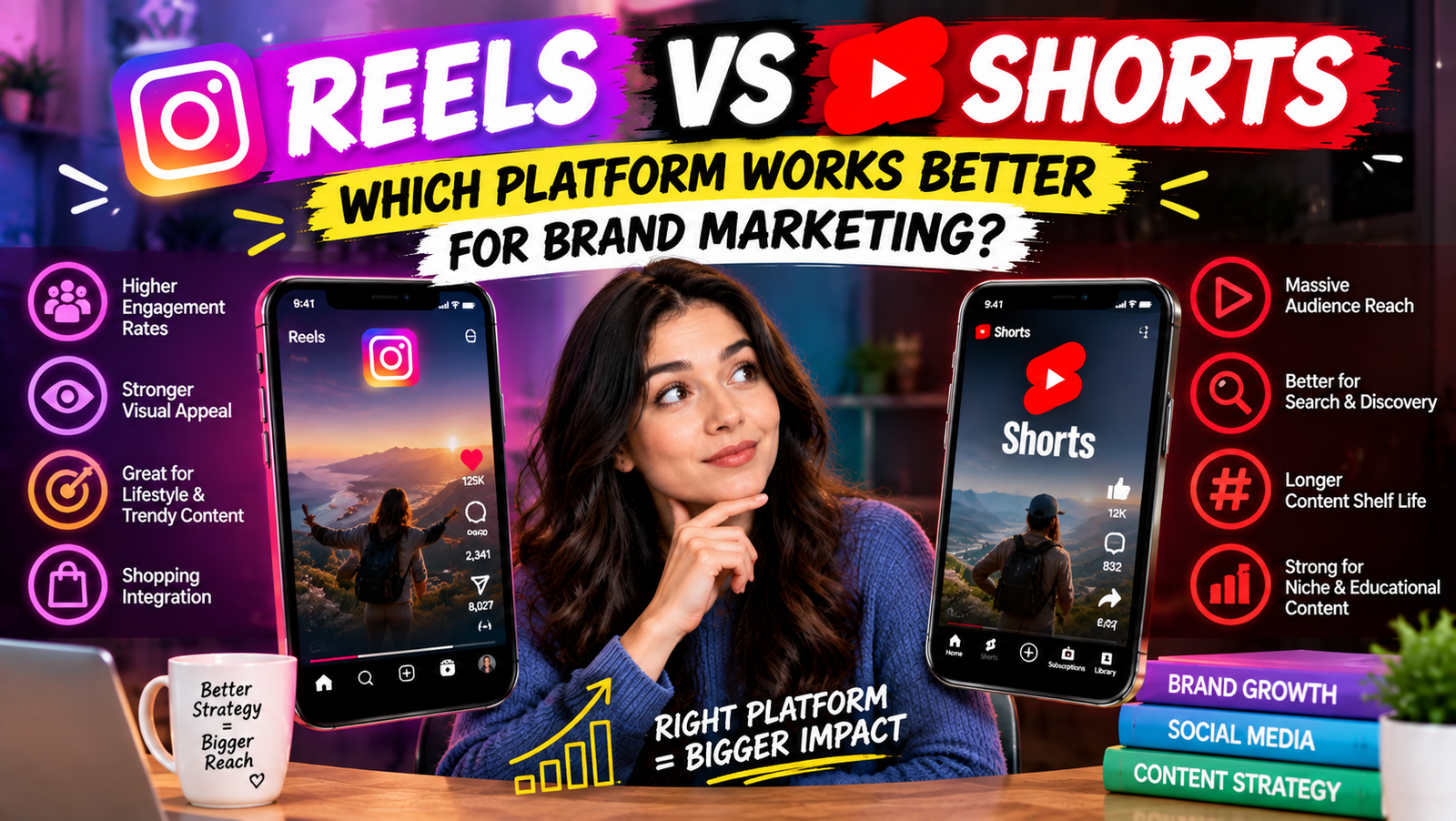
The answer depends on the brand’s audience, marketing goals, content style, and existing social media presence. Instagram Reels can work particularly well for brands focused on visual discovery, community engagement, lifestyle content, and Instagram shopping. YouTube Shorts, meanwhile, can fit brands that want to combine short-form content with YouTube’s broader video ecosystem.
Understanding the differences between the two can help marketers create a more effective short-form video marketing strategy in 2026.
What Are Instagram Reels and YouTube Shorts?
Instagram Reels are short-form videos published on Instagram. Users can discover them through the Reels feed, Explore, search, profiles, and other areas of Instagram.
YouTube Shorts are short vertical videos published on YouTube. They appear in the Shorts feed and can also connect viewers with other content on a YouTube channel.
Both formats are designed for quick consumption. However, the platforms have different audiences, content ecosystems, and marketing opportunities.
Reels vs Shorts: The Biggest Difference
The main difference between Reels and Shorts is the environment surrounding the video.
Instagram is strongly connected to social networking, visual discovery, creators, Stories, direct messages, shopping, and community interaction.
YouTube is primarily a video platform with a large ecosystem that includes Shorts, long-form videos, livestreams, playlists, and search.
For brands, this difference matters because the same short video can serve different marketing purposes on each platform.
1. Audience Reach
Both platforms can help brands reach people beyond their existing followers.
Instagram Reels can expose content to users who do not already follow a brand. This makes Reels useful for businesses trying to increase discovery and build an Instagram audience.
YouTube Shorts also provides discovery beyond subscribers through the Shorts feed and YouTube’s broader recommendation system.
Instead of assuming one platform always delivers more reach, brands should examine where their target customers already spend time.
A fashion brand, for example, may naturally create content around styling, outfits, beauty, and lifestyle. A technology company might use Shorts for product demonstrations, tutorials, comparisons, and educational videos.
2. Instagram Reels for Brand Marketing
Instagram Reels can be especially useful when a brand’s strategy depends heavily on visual identity and social interaction.
Fashion, beauty, food, travel, fitness, lifestyle, and consumer-product brands can create visually engaging Reels that demonstrate products or communicate brand personality.
Reels can also work alongside other Instagram features.
A brand might publish a Reel to attract attention, use Stories to continue the conversation, and direct interested users toward its profile, website, or products.
This creates a connected social media marketing journey.
3. YouTube Shorts for Brand Marketing
YouTube Shorts can be valuable for brands that already use YouTube or plan to build a larger video library.
A brand could publish a short product tip through Shorts and then direct viewers toward a longer tutorial or detailed product video.
For example, a technology company could create a 30-second Short explaining one smartphone feature. A longer YouTube video could then cover the complete phone review.
This creates an opportunity to connect short-form discovery with deeper video content.
4. Reels vs Shorts for Engagement
Engagement is another important consideration.
Instagram is built around social interaction. Users can like, comment, share, save, follow accounts, and communicate through direct messages.
That environment can make Reels useful for brands that want to build an active community around their content.
YouTube also provides likes, comments, subscriptions, and sharing. However, its broader video ecosystem can make Shorts particularly useful as an entry point into a channel’s larger collection of videos.
For this reason, marketers should consider whether their main goal is community interaction, video discovery, or a combination of both.
5. Search and Discoverability
Search is an important part of modern video marketing.
Instagram users can search for topics, accounts, products, and content. Brands can improve discoverability by using clear topics, relevant keywords, descriptive captions, spoken terms, and appropriate hashtags.
YouTube has a long-established search ecosystem. Shorts can therefore become part of a broader content strategy that includes searchable long-form videos.
Brands producing educational content may find this especially useful.
A marketing company could create Shorts around specific questions while publishing detailed videos that provide more comprehensive answers.
6. Content Style Matters
The ideal content style can differ between brands.
Instagram Reels often work well with:
- Product showcases
- Behind-the-scenes videos
- Fashion and beauty content
- Lifestyle videos
- Creator collaborations
- Trending formats
- Customer-generated content
YouTube Shorts can work well with:
- Quick tutorials
- Product demonstrations
- Educational tips
- Technology explainers
- Interesting facts
- Product comparisons
- Short clips from longer videos
These are not strict rules. Both platforms support many different content categories.
The important point is to adapt the presentation to the audience rather than automatically reposting identical content everywhere.
7. Reels vs Shorts for Brand Awareness
Brand awareness means getting more people familiar with a company’s name, products, personality, or message.
Instagram Reels can support awareness through visually recognizable content, creator partnerships, trends, and social sharing.
YouTube Shorts can support awareness through the Shorts feed while also introducing viewers to a brand’s wider YouTube channel.
A useful strategy is to create repeatable video themes.
For example, a skincare brand could publish:
Monday: Skincare myth
Wednesday: Product tip
Friday: Routine tutorial
A consistent format can make a brand’s content easier to recognize.
8. Reels vs Shorts for Driving Traffic
Short-form videos can attract attention, but brands also need to think about what happens after someone watches.
Instagram gives brands several ways to continue the relationship through profiles, Stories, direct messages, and other Instagram features.
YouTube can connect Shorts with long-form videos and a channel subscription.
Therefore, the better platform depends partly on where a brand wants the audience to go next.
If the goal is to build a complete YouTube video ecosystem, Shorts can fit naturally into that strategy. If the goal is to develop an Instagram-centered community and product presence, Reels can play a central role.
9. Content Repurposing
Brands do not necessarily need completely different ideas for each platform.
A single campaign can produce multiple short videos.
For example, a product launch could generate:
- Product teaser
- Feature demonstration
- Customer reaction
- FAQ video
- Behind-the-scenes clip
- Quick tutorial
- Product comparison
These videos can be adapted for both Reels and Shorts.
However, avoid simply uploading a video without considering platform-specific presentation. Captions, hooks, pacing, text placement, and calls to action can be adjusted for each audience.
10. Reels vs Shorts: Which Is Better for Different Goals?
There is no universal answer to the question “Reels vs Shorts: Which platform works better for brand marketing?”
Different marketing goals can lead brands toward different strategies.
| Marketing Goal | Instagram Reels | YouTube Shorts |
|---|---|---|
| Visual brand awareness | Strong fit | Strong fit |
| Instagram community | Strong fit | Not applicable |
| YouTube channel growth | Limited | Strong fit |
| Product demonstrations | Strong fit | Strong fit |
| Long-form video funnel | Limited | Strong fit |
| Lifestyle content | Strong fit | Strong fit |
| Educational content | Strong fit | Strong fit |
| Creator collaborations | Strong fit | Strong fit |
| Instagram shopping ecosystem | Strong fit | Not applicable |
This table is not a ranking. It simply shows how each platform’s surrounding ecosystem can match different marketing objectives.
How Brands Can Use Both Platforms
For many businesses, the choice does not have to be Reels or Shorts.
Using both platforms can create a broader short-form strategy.
Start with one strong video concept. Then adapt it for each platform.
For Instagram:
Hook → Visual story → Community-focused CTA
For YouTube:
Hook → Useful information → Connection to related content
The brand can then monitor performance separately instead of assuming that the same video will behave identically everywhere.
Mistakes Brands Should Avoid
Several common mistakes can reduce the effectiveness of short-form marketing.
Posting Without a Strategy
Publishing random videos can make it difficult to build a recognizable brand identity.
Chasing Every Trend
A trend is useful only when it fits the brand and audience.
Ignoring the First Few Seconds
Short-form viewers can scroll quickly, so the opening needs to communicate value.
Using the Same Caption Everywhere
Platform audiences behave differently. Adapt captions and calls to action where appropriate.
Focusing Only on Views
Views are useful, but brands should also examine engagement, audience retention, profile activity, website traffic, leads, conversions, and other relevant business metrics.
Final Thoughts
The Reels vs Shorts debate does not have one universal winner for every brand. Instagram Reels and YouTube Shorts offer different environments, and each can support short-form video marketing in different ways.
Reels can fit brands that want to build an Instagram-centered visual presence and community. Shorts can fit brands that want to connect short-form discovery with a broader YouTube video strategy.
For many businesses, using both platforms can provide additional opportunities to reach audiences. The key is to create useful, recognizable content and then adapt that content to each platform instead of relying on one identical approach.
Ultimately, the most useful strategy is the one that matches your target audience, content strengths, marketing objectives, and measurable business goals. By testing both formats and studying real performance data, brands can make informed decisions about where to invest their short-form video efforts.