
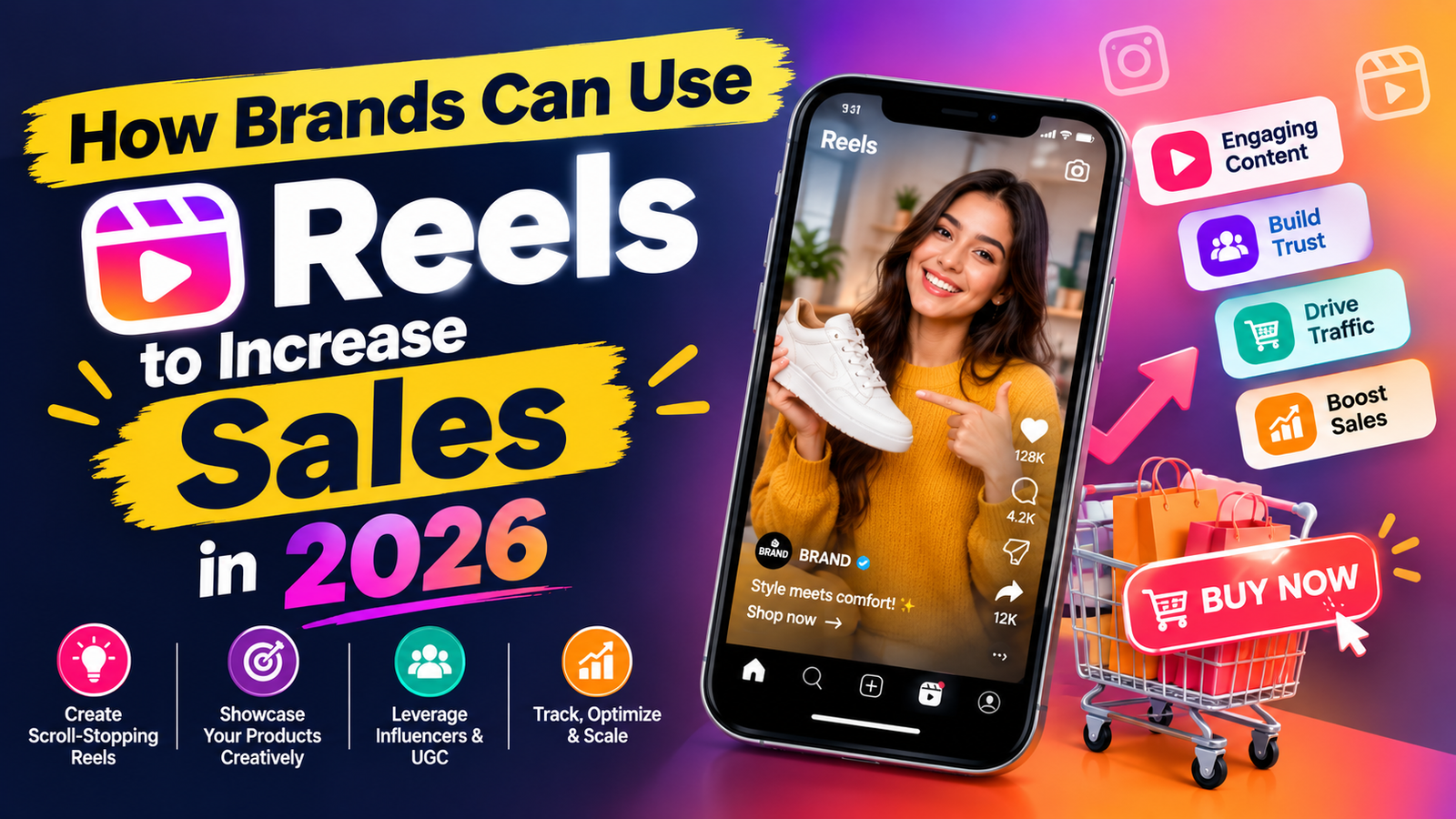
Social media has changed the way people discover, research, and buy products. For brands, simply posting product photos is no longer enough to capture attention. Short-form video has become one of the most effective ways to showcase products, educate customers, build trust, and encourage purchases. That is why learning how brands can use Reels to increase sales is becoming an important part of modern digital marketing.
Instagram Reels can combine entertainment, education, storytelling, product demonstrations, and social proof in a short format. A well-planned Reel can introduce a product to someone who has never heard of the brand and move them toward making a purchase.
However, going viral isn’t the only goal. Successful Reel marketing is about attracting the right audience and giving them a reason to take action. From strong hooks and product demonstrations to user-generated content and strategic calls to action, brands have several ways to turn Reels into a sales channel.
Why Reels Matter for Brand Sales
Reels are designed around short-form video and can reach people beyond a brand’s existing followers.
This makes them particularly useful for product discovery. Someone who has never interacted with your business can encounter a Reel, become interested in the product, visit the brand profile, and eventually make a purchase.
Reels also provide more opportunities to demonstrate a product than a static image.
A skincare company can show how a product is applied. A fashion brand can demonstrate different ways to style an outfit. A technology company can highlight features through a quick demonstration.
The product becomes easier to understand because customers can see it in action.
1. Start Every Reel With a Strong Hook
The first few seconds matter.
People scroll quickly through social media, so brands need to communicate the value of the video immediately.
Instead of starting with a long introduction, open with something that creates curiosity or addresses a problem.
For example:
- “Still struggling with this?”
- “Three mistakes you’re making with…”
- “Here’s why everyone is switching to…”
- “Before you buy this, watch this.”
- “This simple trick can save you money.”
The hook should match the product and audience rather than relying on clickbait.
A strong opening can encourage viewers to keep watching long enough to understand the product.
2. Show the Product in Action
One of the best ways to use Reels to increase sales is to demonstrate the product.
Don’t simply show the packaging.
Show what the product does.
For example, a kitchen brand could demonstrate an appliance preparing a meal. A beauty brand could show a makeup application. A clothing company could show how an outfit looks from different angles.
Demonstrations answer an important customer question:
“What will this product actually do for me?”
When customers can visualize themselves using a product, the content becomes more persuasive.
3. Focus on Benefits Instead of Only Features
Brands often make the mistake of listing product specifications.
Features are useful, but customers are usually more interested in benefits.
Instead of saying:
“This phone has a large battery.”
Explain what that means for the customer:
“You can spend more time watching videos, gaming, and browsing without constantly searching for a charger.”
The same principle applies to almost every industry.
Translate technical features into everyday benefits.
4. Use Before-and-After Content
Before-and-after videos can be highly effective when the transformation is visually clear and the claims are accurate.
Beauty, fitness, home improvement, organization, fashion, and cleaning brands can use this format to show results.
However, brands should avoid misleading edits or unrealistic expectations.
The goal should be to demonstrate a genuine product experience rather than create an exaggerated transformation.
5. Use User-Generated Content
Customers often trust other customers.
User-generated content can make a brand feel more authentic because viewers see real people using a product.
Brands can encourage customers to create videos featuring:
- Product reviews
- Unboxing videos
- Tutorials
- First impressions
- Styling ideas
- Before-and-after experiences
- Product comparisons
With permission, brands can repurpose this content into Reels.
This can reduce the pressure on brands to produce every video themselves while providing social proof.
6. Work With Relevant Creators
Influencer and creator collaborations can help brands reach niche audiences.
The key is choosing creators based on relevance rather than follower count alone.
A smaller creator with a highly engaged audience may generate more meaningful results than a large account whose audience has little interest in the product.
Give creators enough freedom to use their natural style.
Overly scripted promotional content can feel like an advertisement, while authentic demonstrations can feel more relatable.
7. Tell Stories Instead of Constantly Selling
Nobody wants every Reel in their feed to feel like an advertisement.
Storytelling can make promotional content more interesting.
A brand could tell the story of:
- Why the product was created
- A customer problem that inspired the product
- Behind-the-scenes production
- A founder’s journey
- How a product is tested
- Mistakes the company learned from
These stories help people connect with the brand beyond the product itself.
8. Create Educational Reels
Educational content can build authority and trust.
Instead of constantly saying “buy our product,” teach your audience something useful.
For example, a skincare company could create Reels explaining how to apply sunscreen correctly. A financial brand could explain basic budgeting concepts. A technology company could share smartphone tips.
Once viewers trust the brand’s expertise, they may be more likely to explore its products or services.
9. Add a Clear Call to Action
A Reel can receive thousands of views and still generate few sales if viewers don’t know what to do next.
Include a simple call to action.
Examples include:
- “Shop the collection.”
- “Visit our website.”
- “Check the link in our bio.”
- “Save this for later.”
- “Send us a DM to learn more.”
- “See the product details on our profile.”
The CTA should match the goal of the Reel.
Not every video needs to directly push a purchase. Some should focus on engagement, education, or building awareness.
10. Use Product Links and Shopping Features Where Available
Depending on the market and account eligibility, Instagram provides commerce features that can help businesses connect content with products.
Where available, product tagging can reduce the distance between discovering a product and viewing its details.
The easier you make the customer journey, the fewer opportunities there are for potential buyers to lose interest.
Before using any commerce feature, brands should check the current availability and eligibility requirements for their region and account.
11. Create Different Reels for Different Stages of the Buying Journey
Not every viewer is ready to purchase immediately.
That’s why brands should create content for different stages.
Awareness
Introduce the problem, trend, or product category.
Consideration
Explain features, benefits, comparisons, reviews, and use cases.
Conversion
Show offers, product demonstrations, testimonials, and clear purchase instructions.
Loyalty
Share tips, tutorials, customer stories, and ways to get more value from the product.
This creates a complete content funnel rather than relying on individual viral videos.
12. Use Trending Formats Carefully
Trends can increase visibility, but brands shouldn’t follow every trend blindly.
A trend should make sense for the product and audience.
If a popular audio clip or video format fits naturally into your message, use it creatively.
If it doesn’t, forcing the trend may make the brand appear disconnected.
Original ideas can often be more memorable than copying what everyone else is doing.
13. Optimize Reel Captions and On-Screen Text
Don’t rely entirely on audio.
Many users watch videos without sound, so important information should appear visually.
Use concise on-screen text to communicate:
- Product name
- Main benefit
- Price or offer when appropriate
- Key feature
- Call to action
Captions can provide additional context and relevant keywords.
Keep the writing natural rather than filling captions with repetitive keywords.
14. Test Different Reel Formats
There is no universal Reel formula.
Brands should experiment with different approaches.
Try:
- Product demonstrations
- Tutorials
- Customer reviews
- Behind-the-scenes videos
- Educational clips
- Comparisons
- FAQs
- Founder videos
- Unboxings
- Problem-and-solution videos
Track which formats generate meaningful actions rather than focusing only on views.
15. Track the Metrics That Actually Matter
Views are useful, but sales-focused brands should look deeper.
Important metrics can include:
- Watch time
- Retention
- Shares
- Saves
- Profile visits
- Website clicks
- Product page visits
- Leads
- Add-to-cart actions
- Purchases
For example, a Reel with 20,000 views and no meaningful website activity may be less valuable than a Reel with 5,000 highly targeted views that generates sales.
The goal is not simply maximum reach.
The goal is relevant reach that contributes to business results.
Common Reel Marketing Mistakes Brands Should Avoid
Several mistakes can reduce the effectiveness of Reel campaigns.
Making Every Video an Advertisement
Balance promotional content with useful and entertaining videos.
Weak Openings
Don’t spend the first several seconds introducing the brand before explaining why viewers should care.
Poor Audio or Lighting
Even simple videos should have clear sound and adequate lighting.
Ignoring Comments
Comments can reveal customer questions, objections, and content ideas.
Chasing Views Instead of Sales
A viral video isn’t automatically a successful marketing campaign.
Making Unrealistic Claims
Keep product claims accurate and comply with applicable advertising and consumer-protection rules.
A Simple Reel Sales Strategy for Brands
A practical weekly strategy could include:
Monday: Educational Reel
Tuesday: Product demonstration
Wednesday: Customer or creator content
Thursday: Behind-the-scenes Reel
Friday: Problem-and-solution product Reel
Saturday: FAQ or comparison Reel
Sunday: Community-focused or entertaining Reel
This isn’t a strict formula. Brands should adjust the schedule based on their audience and performance data.
Final Thoughts
Learning how brands can use Reels to increase sales is about much more than creating viral videos.
The strongest Reel strategies combine attention-grabbing hooks, useful information, product demonstrations, authentic storytelling, creator content, social proof, and clear calls to action.
Brands should also remember that customers rarely move from seeing one video directly to purchasing. Reels can introduce a product, build trust, answer questions, and encourage people to explore the brand.
Start by understanding your audience and the problems your product solves. Then create short videos that demonstrate real value.
Most importantly, experiment. Analyze what works, improve your content, and repeat the formats that generate meaningful results.
When used strategically, Instagram Reels can become more than an awareness tool—they can become an important part of a brand’s social commerce and sales strategy in 2026.