
Introduction: Why Reel Hooks Matter More Than Ever in 2026
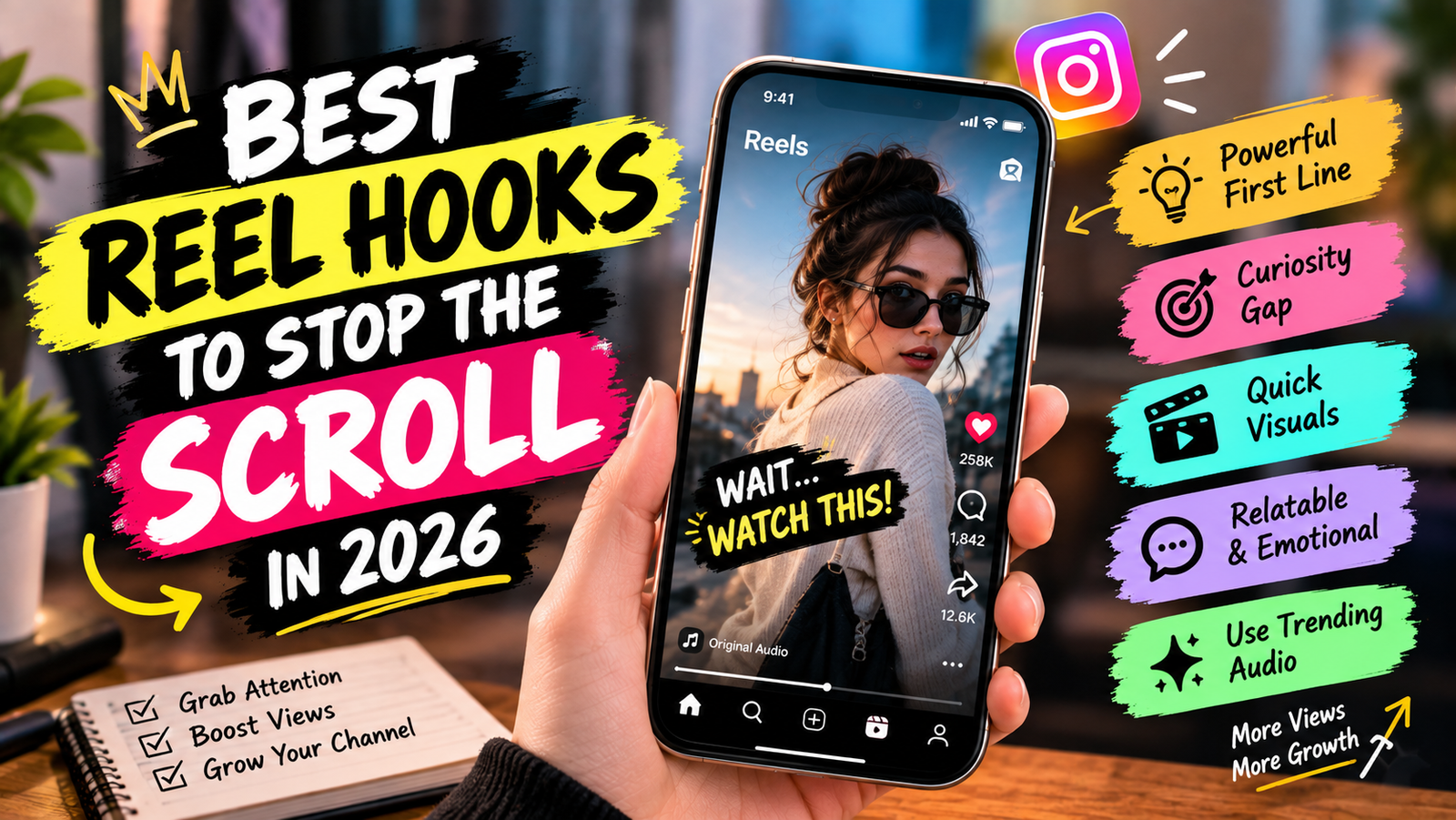
The best Reel hooks to stop the scroll in 2026 are designed to grab attention within the first few seconds. Instagram Reels move quickly, and viewers can swipe away instantly when a video does not feel interesting.
That makes the opening line, visual, or action extremely important.
A great Reel does not necessarily need an expensive camera or complicated editing. Instead, it needs a strong reason for viewers to keep watching. The right hook can create curiosity, highlight a problem, promise a solution, or make someone feel like they are about to discover something valuable.
Whether you are a creator, influencer, small business owner, or social media marketer, learning how to write better Reel hooks can improve your content strategy.
So, what makes a Reel hook work in 2026? Let’s explore the best formulas and examples.
What Is a Reel Hook?
A Reel hook is the opening element of a video that captures attention and encourages viewers to continue watching.
It can appear as:
- Spoken words
- On-screen text
- A visual action
- A question
- A surprising statement
- A problem
- A transformation
- A bold claim
- A storytelling moment
Think of a hook as the headline of your video.
Just as a strong headline can make someone click an article, a strong hook can make someone stop scrolling.
Why the First Few Seconds Matter
Social media users consume enormous amounts of short-form content every day. As a result, creators have very little time to communicate why their video deserves attention.
A slow introduction can hurt retention.
For example, starting with “Hi guys, welcome back to my channel” may not immediately tell viewers what they will gain.
Instead, a stronger opening could be:
“Stop doing this if you want your Reels to get more views.”
The second version creates curiosity and gives viewers a reason to stay.
25 Best Reel Hooks to Stop the Scroll in 2026
1. “Stop Doing This If You Want Better Results”
Problem-focused hooks work because they immediately highlight a potential mistake.
Example:
“Stop doing this if your Instagram Reels aren’t getting views.”
2. “Nobody Tells You This About…”
This hook creates a feeling of discovering hidden information.
Example:
“Nobody tells you this about growing on Instagram.”
The format works particularly well for educational and creator-focused content.
3. “3 Things I Wish I Knew Earlier”
Personal experience adds authenticity.
Example:
“3 things I wish I knew before starting content creation.”
Viewers may continue watching because they want to learn from someone else’s experience.
4. “Before You Buy This, Watch This”
This is an excellent hook for product reviews and affiliate content.
It creates a clear reason to watch before making a purchase.
Example:
“Before you buy these wireless earbuds, watch this.”
5. “Here’s Why Your [Problem] Isn’t Working”
Problem-solving hooks immediately target a viewer’s frustration.
Example:
“Here’s why your Reels aren’t reaching new people.”
This format works well for marketing, fitness, beauty, technology, and educational content.
6. “I Tried This for 30 Days…”
Experiments naturally create curiosity.
Example:
“I posted one Reel every day for 30 days. Here’s what happened.”
Viewers want to discover the result.
7. “You Have to See the Before and After”
Transformation-based hooks are highly visual.
Beauty, fashion, home improvement, fitness, editing, and design creators can use this format effectively.
The key is to show the transformation quickly rather than spending too long explaining it.
8. “Wait Until You See the Last One”
This creates an open loop.
Example:
“Here are five hidden Instagram features. Wait until you see the last one.”
However, the final reveal should actually provide value. Otherwise, viewers may feel disappointed.
9. “Save This for Later”
This hook encourages viewers to think about future usefulness.
Example:
“Save this Reel if you’re planning your next vacation.”
It works especially well for checklists, tutorials, recipes, travel tips, and educational content.
10. “If I Were Starting From Zero Today…”
This hook combines personal experience with practical advice.
Example:
“If I were starting a new Instagram account in 2026, I’d do these five things.”
Creators can use it to share strategies without sounding overly promotional.
11. “The Easiest Way to…”
People love simple solutions.
Example:
“The easiest way to make better Reels with your phone.”
This hook promises convenience and immediately communicates the benefit.
12. “You’re Probably Using This Wrong”
This curiosity-based format can work well for apps, gadgets, products, and everyday tools.
Example:
“You’re probably using Instagram Stories the wrong way.”
The trick is to provide a genuine explanation instead of manufacturing controversy.
13. “Here’s the Shortcut Nobody Talks About”
Shortcut hooks appeal to viewers who want faster results.
Example:
“Here’s the content planning shortcut nobody talks about.”
Use this format only when the video actually provides a useful shortcut.
14. “Can We Talk About This?”
Conversational hooks can make videos feel more personal.
Example:
“Can we talk about why creators are exhausted?”
This format works particularly well for opinion, lifestyle, and community-driven content.
15. “I Made This Mistake So You Don’t Have To”
Mistake-based storytelling builds curiosity and trust.
Example:
“I made this Instagram mistake for six months so you don’t have to.”
Viewers naturally want to know what went wrong.
16. “Here’s What I’d Do Differently”
This is another strong personal-experience hook.
It works for business, education, travel, fitness, fashion, and creator content.
17. “You Have 10 Seconds to…”
Time-based hooks create urgency.
Example:
“You have 10 seconds to find this hidden setting.”
The format can turn a simple tutorial into an interactive challenge.
18. “POV: You Finally…”
POV hooks remain popular because they place viewers inside a situation.
Example:
“POV: You finally find the perfect college outfit.”
Brands can adapt this format to their target audiences.
19. “This Changed the Way I…”
This hook suggests a personal discovery.
Example:
“This one editing trick changed the way I create Reels.”
It works especially well when followed by a practical demonstration.
20. “Don’t Scroll Until You…”
Direct commands can create immediate attention.
Example:
“Don’t scroll until you see this camera trick.”
Use this style sparingly because audiences can quickly become tired of repetitive commands.
21. “The Truth About…”
Truth-based hooks can create curiosity around common assumptions.
Example:
“The truth about going viral on Instagram.”
The content should provide balanced information rather than exaggerated claims.
22. “3 Free Tools You Need in 2026”
Number-based hooks make the content promise easy to understand.
They work particularly well for technology, productivity, marketing, and creator content.
23. “What Would You Choose?”
Question hooks invite participation.
Example:
“Which phone would you choose: A or B?”
These hooks can encourage comments while making the content more interactive.
24. “Watch Me Turn This Into…”
Process-based hooks make viewers curious about the outcome.
Example:
“Watch me turn this basic photo into a professional Instagram post.”
The visual transformation can keep viewers engaged.
25. “You Need to Know This Before…”
This hook works well when the audience is about to make a decision.
Example:
“You need to know this before starting your first YouTube channel.”
It combines urgency with practical value.
How to Write Better Reel Hooks in 2026
A strong hook usually answers one important question:
Why should I keep watching?
Start by identifying the main benefit of your video.
Next, turn that benefit into a short, specific opening.
For example:
Weak:
“Today I’m going to talk about skincare.”
Stronger:
“These three skincare mistakes could be ruining your routine.”
The second version introduces a problem and creates curiosity.
Use On-Screen Text Strategically
Many viewers watch short videos without sound.
Therefore, on-screen text can reinforce the spoken hook.
Keep the text short and easy to read. Place the main idea early rather than hiding it several seconds into the video.
Large, clear text can also help viewers understand the context immediately.
Match the Hook With the Payoff
One of the biggest mistakes creators make is creating a powerful hook and then delivering a weak video.
If you promise three tips, give three useful tips.
If you tease a transformation, show the transformation.
If you ask an interesting question, provide a meaningful answer.
The hook should open the loop, while the rest of the video should close it.
Avoid Clickbait
Clickbait might generate an initial view, but it can damage audience trust.
Avoid exaggerated claims such as “This will make you instantly famous” unless you can genuinely support them.
Instead, create curiosity while remaining honest.
A strong hook does not need to trick people.
It needs to make them curious enough to stay.
Best Reel Hook Formula for Brands
Brands can use a simple structure:
Problem + Curiosity + Solution
For example:
“Still struggling to choose the right laptop? Here’s the one feature you should check first.”
This approach identifies a problem, creates curiosity, and promises useful information.
Another effective structure is:
Result + Method
Example:
“Want better-looking product photos? Try this simple lighting trick.”
These formulas can work across beauty, fashion, technology, food, travel, fitness, and e-commerce.
Final Verdict
The best Reel hooks to stop the scroll in 2026 are short, specific, curiosity-driven, and focused on the viewer.
You do not need a complicated formula for every video. Sometimes a simple question can outperform an elaborate introduction. In other cases, a surprising fact, personal story, transformation, or practical tip can capture attention immediately.
The most important lesson is to create a hook that matches the actual content.
Test different openings, monitor retention, and learn which formats your audience responds to best. Over time, your data will reveal which hooks deserve a place in your content strategy.
Remember, the goal is not simply to stop the scroll.
The real goal is to make viewers glad they stopped.