
Introduction: Why Short-Form Video Marketing Matters in 2026
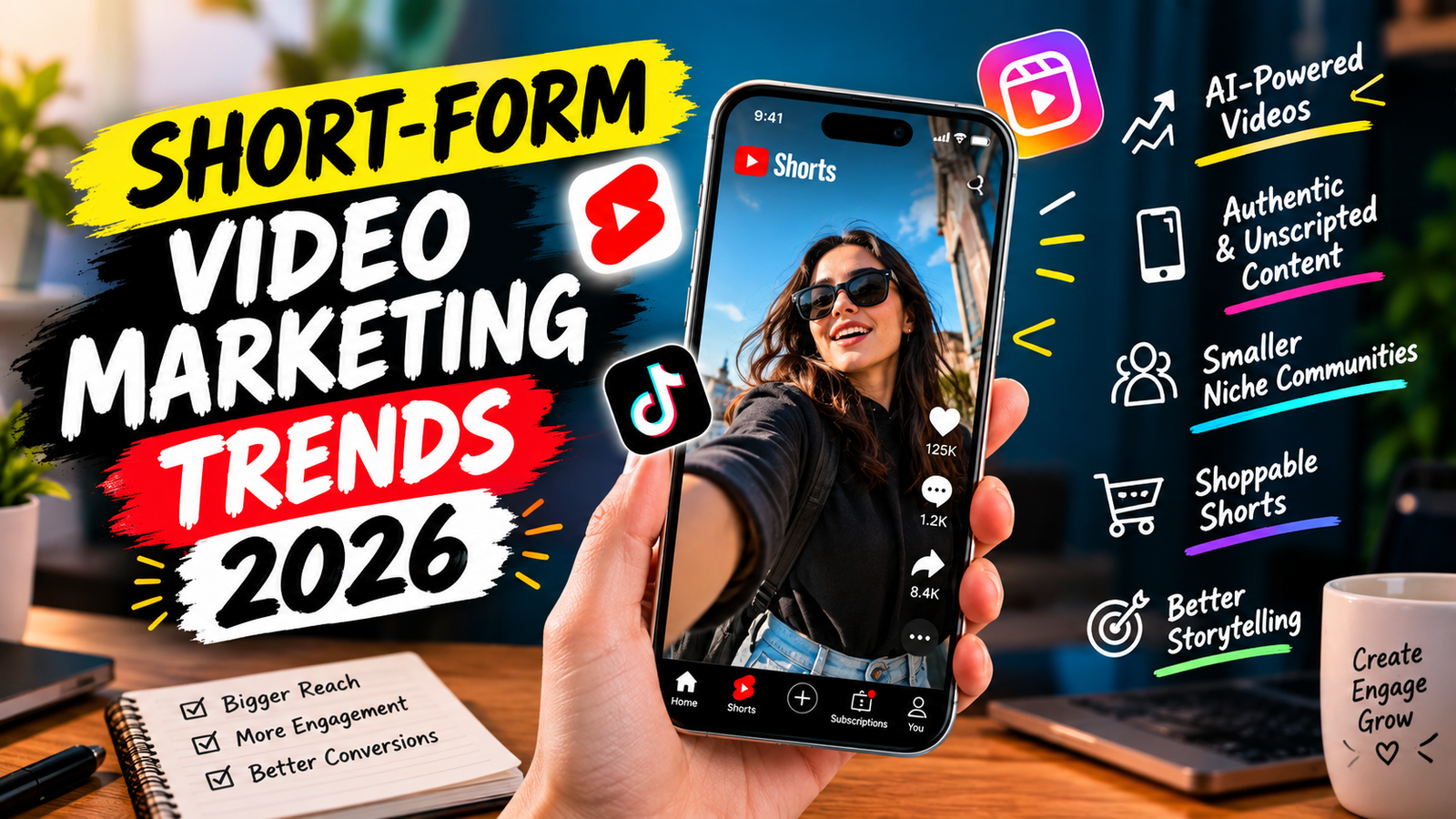
Short-form video marketing trends 2026 are changing how brands attract attention, build communities, and drive sales online. Platforms such as Instagram Reels, YouTube Shorts, and TikTok have made vertical video a central part of digital marketing.
Why does short-form video work so well? The format delivers information quickly while keeping the experience highly visual and mobile-friendly. A strong 20-second video can introduce a product, answer a question, demonstrate a feature, or create an emotional connection without requiring a long attention span.
For brands, that creates a major opportunity. However, simply posting random videos is no longer enough. Audiences now expect originality, useful information, authentic storytelling, and entertaining experiences.
As a result, marketers need smarter short-form content strategies in 2026. From AI-assisted production to social commerce, several trends are shaping the future of short video marketing.
Let’s look at the biggest trends brands should watch.
1. AI-Powered Short-Form Video Creation
Artificial intelligence is becoming an important part of the video marketing workflow.
Marketers can use AI-assisted tools to brainstorm ideas, create scripts, generate captions, edit clips, remove backgrounds, translate content, and produce different versions of a video.
This can save time, especially for brands that need to publish frequently.
However, successful marketers are unlikely to depend entirely on automated content. Instead, they will combine AI efficiency with human creativity.
The winning formula is simple: use AI to speed up production while keeping human storytelling at the center.
2. Authentic Videos Are Outperforming Overly Polished Content
Consumers have become accustomed to highly edited advertisements. Consequently, overly polished videos can sometimes feel less relatable.
Brands are increasingly experimenting with behind-the-scenes clips, employee videos, customer experiences, product demonstrations, and creator-led content.
A smartphone-shot video can perform well when it communicates a useful or interesting message.
That does not mean production quality is irrelevant. Good lighting, clear audio, strong editing, and readable captions still matter. The difference is that authenticity often matters more than expensive production.
3. Creator-Led Marketing Will Keep Growing
Creators have become valuable partners for brands because they already understand how to communicate with their audiences.
Instead of producing every video internally, companies can collaborate with creators who understand specific communities and niches.
For example, a beauty brand might work with skincare creators, while a technology company could collaborate with gadget reviewers.
Creator-led campaigns can also feel more natural than traditional advertising.
In 2026, brands will increasingly focus on finding the right creator rather than simply the biggest creator.
4. Short-Form Video SEO Becomes More Important
Search is no longer limited to traditional search engines.
People increasingly discover products, tutorials, restaurants, destinations, apps, and services through social platforms.
That makes video SEO an important part of short-form marketing.
Brands can improve discoverability by using:
- Relevant keywords
- Clear video titles
- Search-friendly captions
- Useful descriptions
- On-screen text
- Relevant hashtags
- Natural spoken keywords
For instance, instead of creating a generic video titled “Our New Product,” a brand could create content around a specific search intent such as “How to Choose the Best Wireless Earbuds.”
The second approach gives both viewers and platforms clearer context.
5. Social Commerce and Shoppable Videos
Short videos are increasingly becoming shopping experiences.
A viewer can discover a product, watch a demonstration, learn about its benefits, and move toward a purchase without leaving the social platform or content ecosystem.
This makes short-form video particularly valuable for e-commerce brands.
Product demonstrations, comparisons, tutorials, unboxings, and before-and-after formats can help turn attention into buying interest.
The key is to avoid making every video feel like an advertisement.
Instead, brands should create useful content first and introduce the product naturally.
6. Educational Short Videos Will Gain More Attention
Not every successful short video needs to entertain.
Educational content can perform strongly because viewers actively search for quick answers.
Popular formats include:
- “3 tips” videos
- Quick tutorials
- Industry facts
- Product explainers
- How-to videos
- Common mistakes
- Myth-busting content
- Quick comparisons
- Expert tips
For brands, educational videos can also build authority.
A company that consistently answers audience questions becomes more than a seller. It becomes a useful source of information.
7. Personalization Will Shape Video Marketing
Audiences do not all respond to the same message.
Therefore, brands are moving toward more personalized content strategies.
Different videos can target different customer groups based on interests, shopping behavior, location, age group, or stage in the buying journey.
For example, a fashion brand could create separate videos for college students, office professionals, and festive shoppers.
AI-assisted analytics can help marketers identify which topics and formats resonate with each audience.
Personalization can make short-form campaigns more relevant without requiring completely different brand identities.
8. Video Series Will Replace One-Off Posts
A single viral video can bring attention, but a series can build a relationship.
That is why recurring short-form formats are becoming increasingly valuable.
Brands can create series such as:
- “Tip of the Day”
- “Product Myth vs Fact”
- “Behind the Brand”
- “One-Minute Tutorials”
- “Ask an Expert”
- “Before You Buy”
- “Weekly Industry News”
A recognizable series gives audiences a reason to return.
Moreover, series-based content makes planning easier for marketing teams because they do not need to invent an entirely new concept for every upload.
9. Community Engagement Will Matter More Than Views
Views are useful, but they do not tell the whole story.
A video with fewer views can deliver stronger marketing results if it generates comments, saves, shares, website visits, or purchases.
Brands should therefore track deeper engagement signals.
Useful metrics include:
- Watch time
- Audience retention
- Shares
- Saves
- Comments
- Click-through rate
- Profile visits
- Website traffic
- Conversions
Encouraging viewers to answer questions can also create conversations.
For example, a technology brand could ask, “Which smartphone feature matters most to you?” The responses can provide both engagement and valuable customer insights.
10. Repurposing Content Across Platforms
Creating separate content for every social platform can consume a lot of time.
Repurposing provides a more efficient alternative.
A long YouTube video can become several Shorts. A podcast can turn into multiple vertical clips. A product tutorial can become a series of short videos.
However, simple copy-and-paste publishing is not always ideal.
Each platform has different audience expectations, video styles, and engagement patterns.
Therefore, marketers should adapt the hook, captions, pacing, and call-to-action for each platform.
One piece of content can become several assets without feeling identical.
11. Interactive and Community-Driven Videos
Short-form video is becoming more interactive.
Brands can encourage audiences to participate through questions, polls, challenges, comments, and response videos.
User-generated content can add another layer to this strategy.
When customers create videos about their experiences with a product, brands gain content while customers become part of the marketing story.
This approach can strengthen trust because potential buyers see real people using or discussing products.
12. Stronger Hooks in the First Few Seconds
Attention is extremely valuable in short-form video.
A weak opening can cause viewers to swipe away before the main message appears.
Therefore, brands need stronger hooks.
Effective openings can include:
- A surprising fact
- A direct question
- A common problem
- A bold statement
- A quick transformation
- A curiosity gap
- A useful promise
For example, instead of starting with a long brand introduction, a video could begin with: “Your phone battery may be draining because of these three settings.”
The audience immediately understands why they should continue watching.
How Brands Can Build a Short-Form Video Strategy in 2026
Following trends is helpful, but strategy matters more.
Start by defining your target audience. Then identify the problems, questions, and interests that matter to them.
Next, create several repeatable content pillars. These could include education, entertainment, product demonstrations, customer stories, and behind-the-scenes content.
After that, develop a realistic publishing schedule.
Consistency matters, but quality should not disappear just to increase posting frequency.
Finally, review performance regularly. Look beyond views and identify which topics generate the strongest retention, engagement, traffic, and conversions.
Common Short-Form Video Marketing Mistakes
Brands can easily waste time by chasing every trend.
One common mistake is copying viral videos without adapting them to the brand. Another problem is creating content that focuses entirely on selling.
Poor audio, weak hooks, excessive text, and long introductions can also hurt retention.
Additionally, marketers should avoid treating every platform exactly the same way.
The better approach is to understand each platform while maintaining a consistent brand voice.
The Future of Short-Form Video Marketing
Short-form video will continue to evolve as technology and audience behavior change.
AI will make production faster. Creator partnerships will become more strategic. Social commerce will connect content with purchases. Meanwhile, video SEO will help audiences discover useful content through search and recommendations.
Still, one principle will remain important: people watch content that gives them a reason to care.
Technology can help brands produce videos faster, but it cannot replace a strong idea.
Final Verdict
The biggest short-form video marketing trends 2026 point toward a more intelligent, authentic, and performance-focused approach to social content.
AI-assisted production, creator collaborations, video SEO, social commerce, personalization, educational content, and interactive experiences will shape how brands compete for attention.
However, marketers should not chase every trend blindly. The strongest strategy combines useful information, compelling storytelling, consistent branding, and data-driven improvements.
In 2026, short-form video is no longer just a social media format. It is becoming a complete marketing channel that can attract audiences, build trust, generate leads, and drive sales.
For brands willing to experiment, learn from analytics, and put audience needs first, short-form video can remain one of the most powerful digital marketing tools available.